






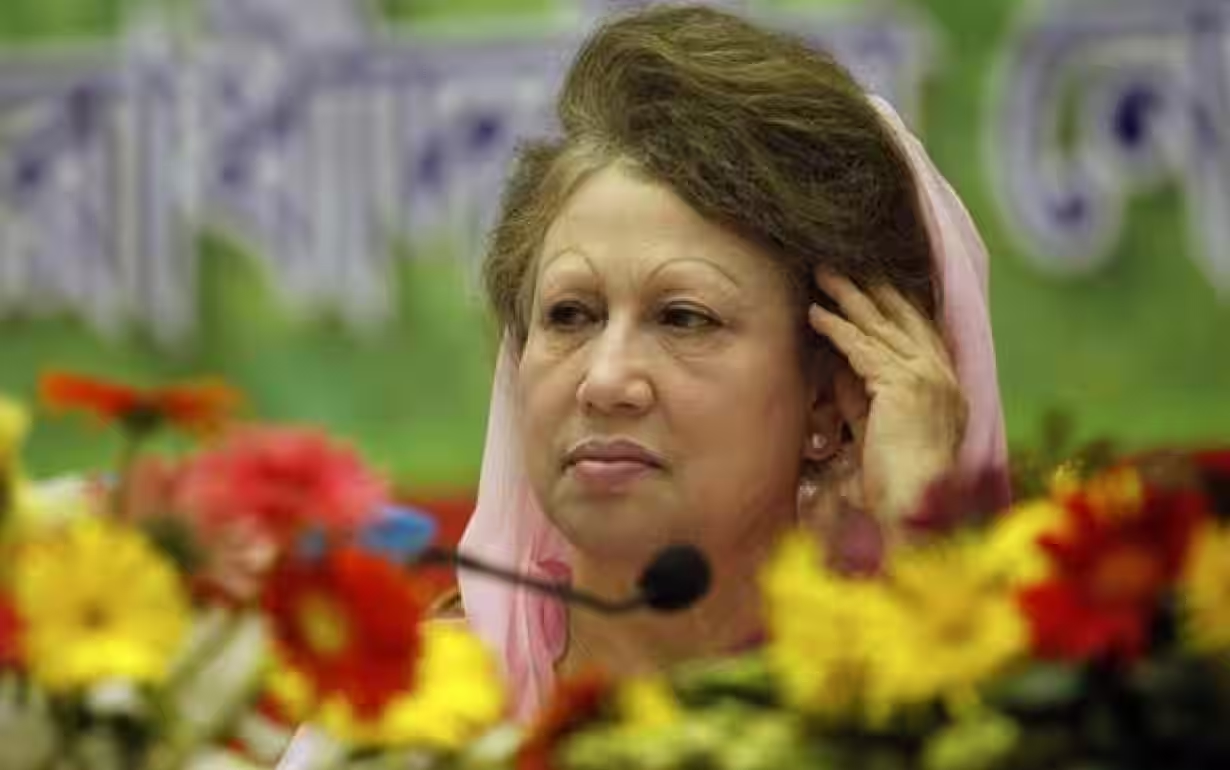
DHAKA — Begum Khaleda Zia, the three-time Prime Minister of Bangladesh and Chairperson of the Bangladesh Nationalist Party (BNP), died in the early hours of Tuesday, December 30, 2025. Her passing marks the end of a tumultuous and defining chapter in South Asian politics.
Zia breathed her last at approximately 6:00 AM local time at Evercare Hospital in Dhaka, shortly after the Fajr prayers. She had been battling multiple chronic health issues, including advanced liver cirrhosis, diabetes, and heart complications, which had seen her travel to London for treatment earlier in the year.
National Mourning and State Honors
The interim government, led by Nobel laureate Muhammad Yunus, has moved swiftly to honor the “uncompromising leader” of Bangladeshi democracy.
- State Mourning: A three-day period of state mourning has been declared from Wednesday to Friday.
- Public Holiday: Wednesday, December 31, has been declared a general holiday to allow the public to attend her Namaz-e-Janaza (funeral prayers).
- Burial: Zia is expected to be buried with full state honors next to her late husband, former President Ziaur Rahman, at the Sher-e-Bangla Nagar in Dhaka.
A Legacy of “Uncompromising” Leadership
Khaleda Zia’s political journey began in 1981 following the assassination of her husband. From a “shy housewife,” she transformed into a formidable political force, leading the movement that toppled the military autocracy of HM Ershad in 1990.
- Historic Firsts: In 1991, she became the first woman to lead a democratic government in Bangladesh and only the second in the Muslim world.
- Key Reforms: Her tenures (1991–1996 and 2001–2006) were marked by significant social reforms, including making primary education free and compulsory and introducing stipends for female students—a move credited with revolutionizing women’s education in the country.
Political Transition and the February Polls
Her death comes at a critical juncture as Bangladesh undergoes a fragile democratic transition following the ousting of her arch-rival, Sheikh Hasina, in August 2024.
- The Heir Apparent: Her son, Tarique Rahman, who returned from 17 years of exile on December 25, is now poised to lead the BNP into the February 12, 2026, general elections.
- Global Condolences: Leaders from across the world, including Indian PM Narendra Modi and Pakistani PM Shehbaz Sharif, have expressed grief, describing her as a “guardian of democracy” and a “towering figure” in the region.
Chief Adviser Muhammad Yunus described her passing as an “irreparable loss,” stating that her “uncompromising leadership repeatedly inspired the nation to regain its civil liberties.”