

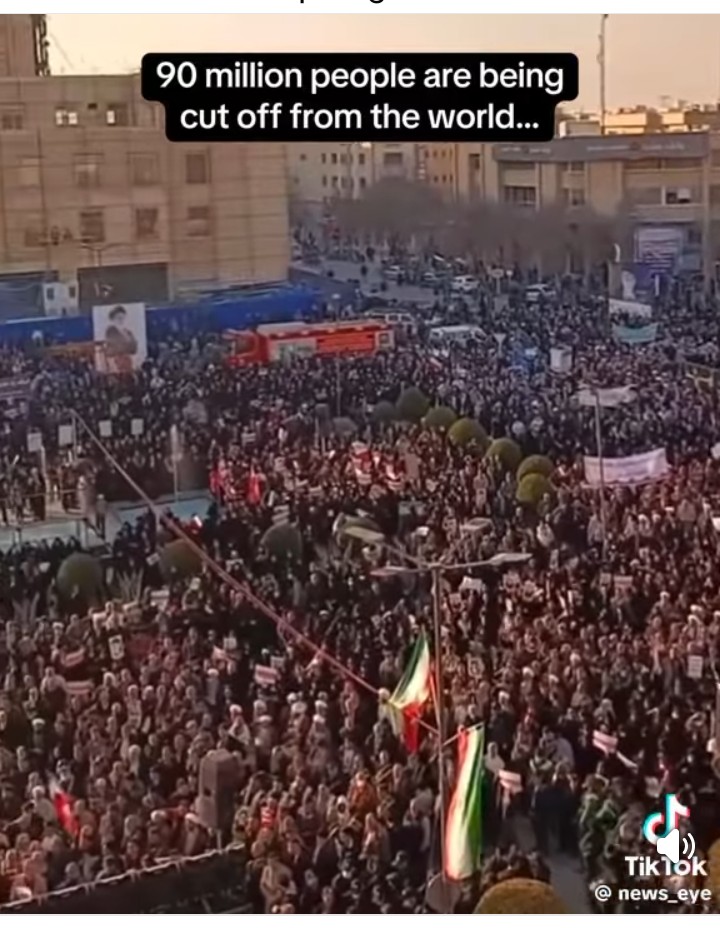
Tehran has descended into chaos as sweeping nationwide protests rocked Iran, leaving burned buildings, torched buses and looted shops in their wake. Large sections of the capital have been reduced to scenes witnesses likened to a “war zone,” as demonstrators openly call for the removal of Supreme Leader Ayatollah Ali Khamenei in one of the gravest challenges to the Islamic Republic in years.
Human rights groups monitoring the unrest report that at least 38 people have been killed and more than 2,200 arrested in clashes between protesters and security forces. Iranian authorities have yet to publish full casualty figures.
The unrest comes at a time when Iran is still grappling with the aftermath of a short but intense 12-day conflict in June, triggered by Israel, during which U.S. forces carried out strikes on Iranian nuclear facilities. The confrontation further strained Iran’s fragile economy and deepened public frustration.
“This looks like a war zone, all the shops have been destroyed,” an Iranian journalist said while reporting from Shariati Street in the northern city of Rasht, near the Caspian Sea, where fires raged.
The protests were initially driven by economic hardship, particularly the sharp decline of Iran’s currency. The rial has lost much of its value, sending prices of basic goods such as meat and rice soaring. Inflation is estimated at around 40 percent annually, placing severe pressure on households nationwide.
Tensions escalated further in December after the government introduced a new pricing tier for subsidised petrol, increasing fuel costs in a country long used to some of the world’s cheapest gasoline. Officials said fuel prices would now be reviewed every three months, stoking fears of additional hikes.
Food prices are also expected to climb following the central bank’s decision to scrap a preferential exchange rate for most imports, maintaining subsidies only for medicine and wheat.
The demonstrations began with protests by merchants and traders in Tehran before spreading rapidly across the country. While initially centred on economic grievances, the rallies quickly took on a political tone, reflecting years of pent-up anger, particularly since the death of 22-year-old Mahsa Amini in police custody.