









The Economic and Financial Crimes Commission (EFCC) has explained that delays in prosecuting some politically exposed and high-profile individuals stem from the rigorous process of gathering credible evidence, not inactivity or bias.
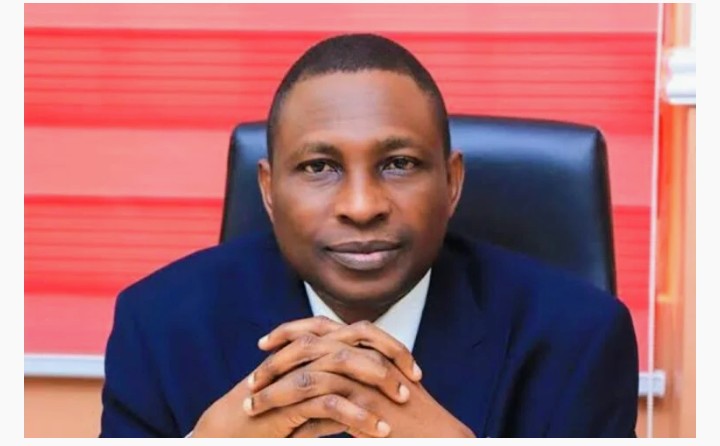
EFCC Chairman, Mr Ola Olukoyede, made this clarification during an interview on Sunday Politics on Channels Television, where he addressed concerns over the pace of high-profile corruption cases.
According to Olukoyede, cases involving cybercrime are often concluded swiftly because they typically require the examination of electronic devices and digital trails. However, investigations involving senior public officials and complex financial dealings demand far more time and resources.
“In 48 hours, I can investigate and arraign a cybercriminal. It is a matter of getting the devices and concluding the process,” he said. “But when it comes to politically exposed persons or public corruption involving complex transactions, it takes time. I cannot go to court until I am fully prepared.”
He emphasised that the duration of such cases should not be mistaken for inaction, noting that the commission must build watertight cases capable of standing up to legal scrutiny.
The EFCC boss also rejected claims that the agency is selective or politically motivated in its anti-corruption efforts, insisting that the commission does not target opposition figures.
Olukoyede further explained that legal hurdles, including cross-border asset tracing and international cooperation, often slow investigations, especially when funds or properties are located outside Nigeria.
Referring to an ongoing case involving a former Minister of Justice and Attorney-General of the Federation, Abubakar Malami, he said the commission’s actions were neither personal nor politically driven.
“If Nigeria must move forward, we must all agree that the fight against corruption should be carried out without partisanship,” Olukoyede said. “That is what we want Nigerians to understand and support.”
He reaffirmed the EFCC’s commitment to pursuing corruption cases diligently and professionally, regardless of the status or political affiliation of those involved.