











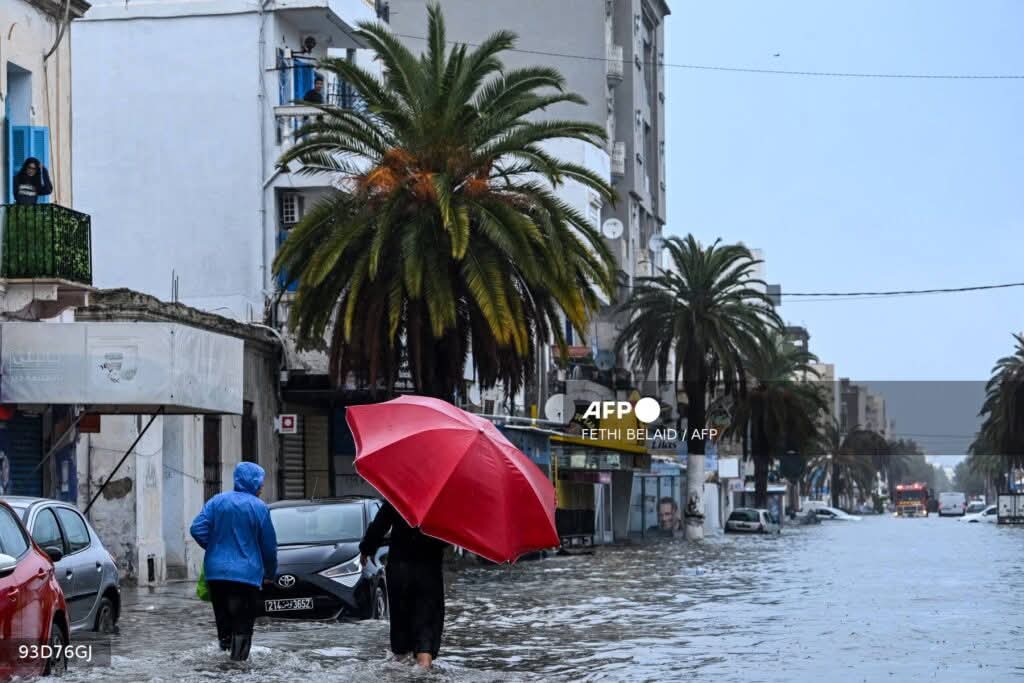
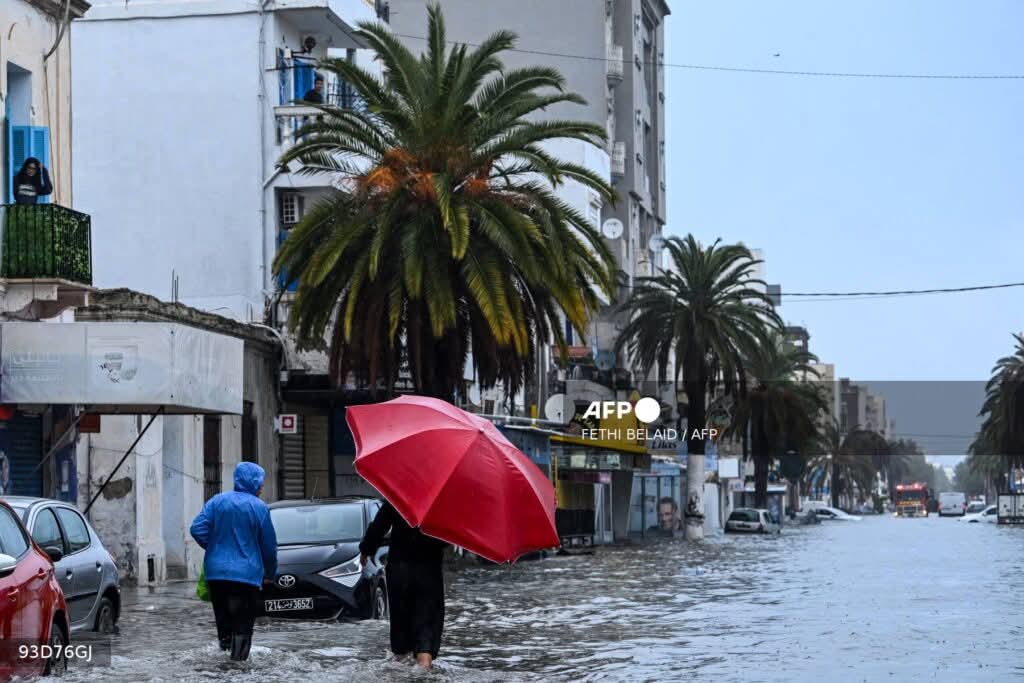
At least four people have died after torrential rains triggered widespread flooding across Tunisia, forcing the closure of schools and businesses in several parts of the country.
Authorities said all the fatalities were recorded in Moknine, in the Monastir governorate. According to civil defence spokesperson Khalil Mechri, two victims were swept away by raging floodwaters, while a woman drowned inside her home.
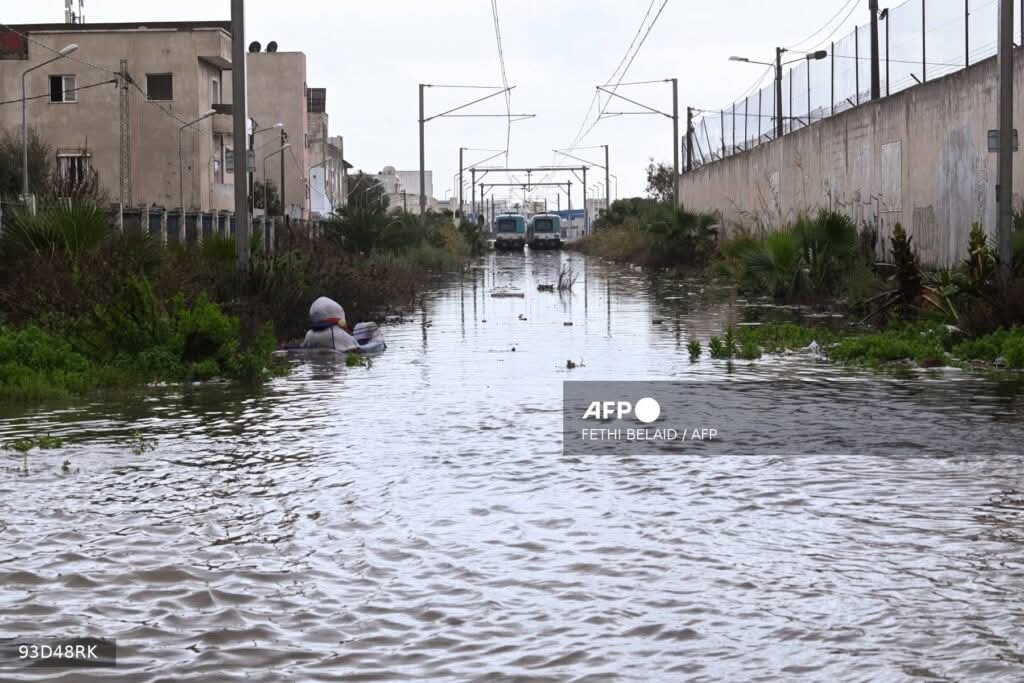
The flooding followed exceptionally heavy rainfall, which officials say is the worst the country has experienced in more than 70 years. Abderazak Rahal, head of forecasting at Tunisia’s National Institute of Meteorology (INM), told AFP that some regions had not seen such rainfall levels since 1950.
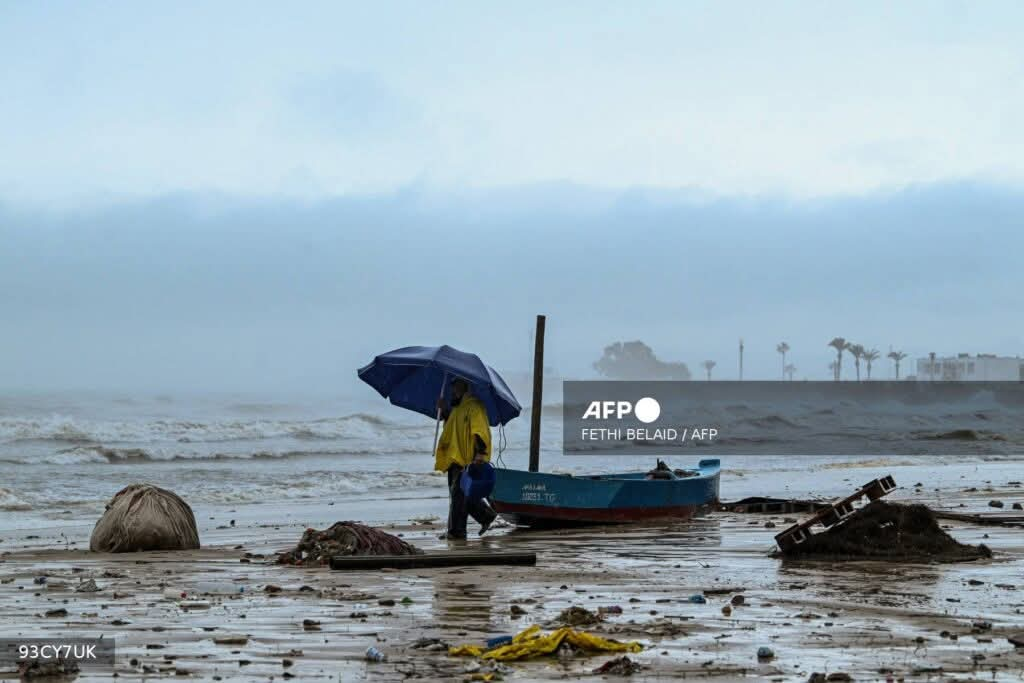
“We have recorded unprecedented amounts of rain for the month of January,” Rahal said, noting that Monastir, Nabeul and the Greater Tunis area were among the hardest hit.
As the downpours continued, authorities announced the suspension of classes on Wednesday in both public and private schools and universities across 15 of Tunisia’s 24 governorates. Transport was also disrupted, with train services halted in several areas due to flooded tracks.
Videos and photographs circulating on social media showed cars stranded as fast-moving water surged through streets in towns and cities. Tunis resident Mostafa Riyahi described waking up to find his home partially flooded after rain fell continuously overnight.
The Tunisian army has been deployed to assist emergency services in rescue operations, a defence ministry source said. Another INM official, Mahrez Ghannouchi, warned that the situation remained “critical” in some regions.
In the coastal tourist village of Sidi Bou Said, near Tunis, meteorologists recorded 206 millimetres of rain since Monday evening.
While the rainfall has broken records, flooding is a recurring problem in Tunisia, often linked to ageing and poorly maintained drainage systems, especially in rapidly growing urban areas. Blocked stormwater networks and reduced natural absorption caused by urbanisation have worsened runoff during heavy rains.
The extreme weather comes despite Tunisia enduring a prolonged seven-year drought, intensified by climate change, which has significantly reduced water levels in dams and strained water supplies, particularly for agriculture.
Neighbouring Algeria has also been affected by severe weather, with authorities confirming the death of a man in his sixties after floods hit the western province of Relizane.