





The Northern Elders Forum (NEF) has strongly criticised the Federal Government’s decision to locate Nigeria’s national gold refinery in Lagos State, describing the move as a deliberate policy choice that deepens economic marginalisation and structural inequality against Northern Nigeria.
In a statement addressed to Northern political leaders, elites, and stakeholders, the Forum warned that situating the refinery far from the country’s major gold-producing regions in the North would have grave economic, social, and security implications. The statement, signed by NEF spokesperson, Professor Abubakar Jika Jiddere, said the decision was neither accidental nor a policy oversight but a calculated action that deprives Northern communities of value addition.
According to the Forum, the siting reinforces an extractive economic structure in which raw materials are sourced from the North while processing, financing, branding, and industrial infrastructure are concentrated in Lagos and its surrounding areas.
“The decision to locate Nigeria’s gold refinery in Lagos while gold is mined from Northern soil is not a policy error. It is a deliberate act of economic dispossession,” Jiddere stated. “It removes value addition from Northern communities, exports opportunities to already privileged centres, and condemns the source regions to poverty, unemployment, and persistent insecurity.”
NEF described the development as a continuation of colonial-era economic arrangements, labelling it “internal colonialism” incompatible with Nigeria’s federal structure and development goals. The group argued that for decades, the North has served as a “triple extraction zone,” supplying raw minerals, agricultural produce, and cheap labour, while industrial processing and economic infrastructure remain concentrated elsewhere.
“Northern farmers produce most of the nation’s food, yet agro-processing plants, logistics hubs, and export value chains are sited outside the region,” Jiddere said. “Agricultural products leave the North in raw form and return as expensive finished goods, a situation that reflects deliberate underdevelopment.”
The Forum warned that the continued denial of industrial facilities to the region has worsened youth unemployment, rural decline, and insecurity. It also criticised the silence of Northern political leaders, accusing governors, lawmakers, ministers, and traditional rulers of failing to protect the economic interests of their people.
“History will judge leaders who remain silent while their region is subjected to systematic economic exclusion,” the statement noted.
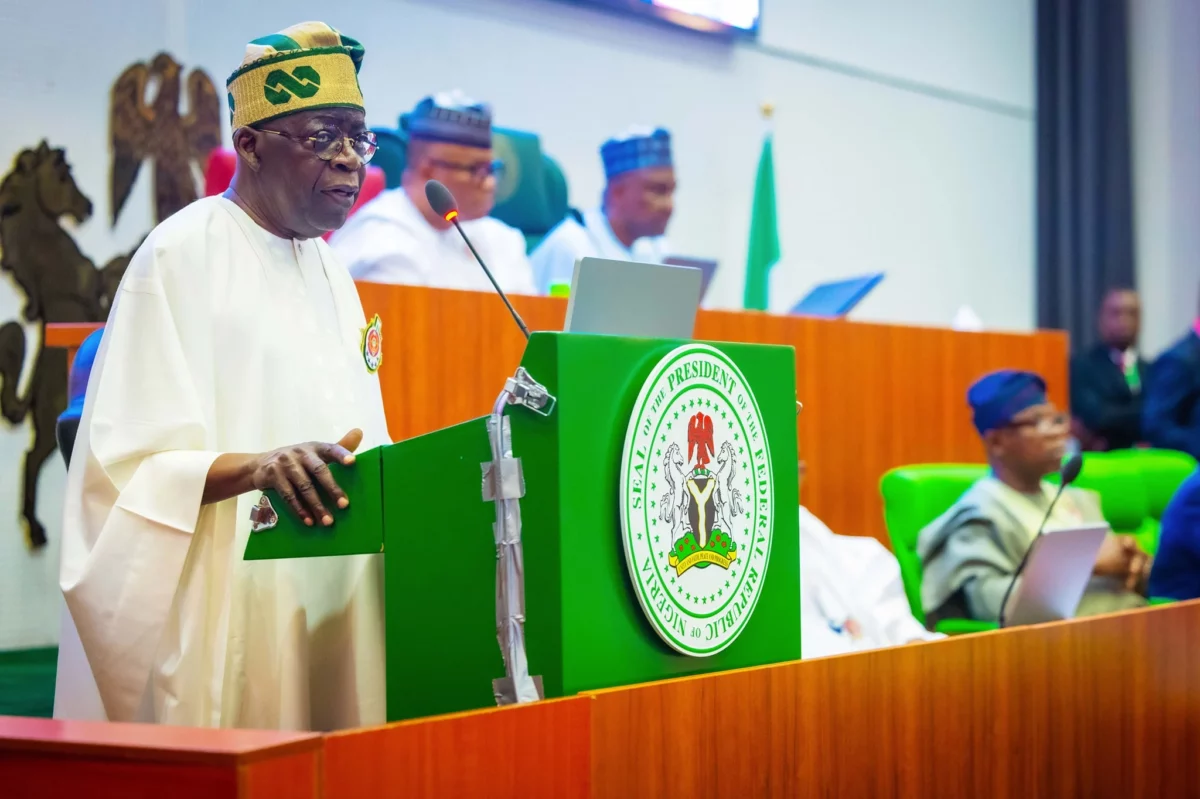
In an open letter to President Bola Ahmed Tinubu and the Federal Executive Council, NEF anchored its objections on constitutional provisions, including Sections 14(3), 16(1)(b), and 162(2) of the 1999 Constitution (as amended). The Forum argued that the derivation principle should extend beyond fiscal allocations to include meaningful industrial development in resource-bearing areas.
“Resource origin must matter in the distribution of economic benefits. Denying gold-producing regions the industrial gains of refining hollowed out the essence of derivation,” it stated.
NEF further warned that the persistent concentration of strategic economic assets in Lagos has intensified spatial inequality, weakened trust in federalism, and heightened perceptions of marginalisation in the North.
Drawing from international best practices, the Forum noted that countries such as Australia, Canada, South Africa, Ghana, and Chile deliberately site processing and refining facilities close to mining locations to drive regional industrialisation, job creation, and economic inclusion.
The Forum also highlighted the environmental degradation, insecurity, and criminal networks associated with unregulated mining in states such as Zamfara, Kebbi, Niger, Kaduna, and Katsina, stressing that the region bears the burden of extraction without enjoying its benefits.
NEF therefore called on the Federal Government to adopt a decentralised, resource-proximate refining framework and demanded that at least one primary gold refinery be located within Northern Nigeria’s gold-producing corridor, with Lagos limited to trading, certification, or export functions.
“No rhetoric about national unity can survive sustained economic exclusion,” the Forum warned, urging the government to treat the demand as a constitutional obligation rather than a concession.