











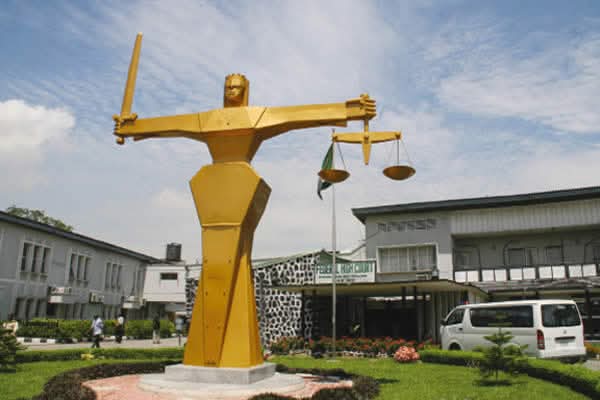
The Federal High Court in Lagos has dismissed a petition seeking the dissolution of the Incorporated Trustees of Live Seed Christian Church of God, ruling that the applicants failed to present credible evidence to justify winding up the church.
Justice Akintayo Aluko delivered the judgment on January 5, 2026, in Suit No. FHC/L/CP/1981/2022.
The petition was filed by trustees Obiezughara Justin and Obiezughara Sophie through their counsel, Chioma Anumba, against the Incorporated Trustees of Live Seed Christian Church of God, Ugboke Adanemem and Ugboke Abigail.
The petitioners urged the court to dissolve the church, alleging mismanagement, oppressive conduct by their co-trustees and refusal to convene statutory and general meetings. They also asked the court to order the disclosure of the church’s financial records and a detailed account of its income and expenditure from March 20, 2022, to the date of judgment.
The applicants further claimed they contributed substantial personal funds towards the purchase of land and construction of the church building. They alleged that the respondents diverted church income for personal use without rendering proper accounts.
In addition, the first petitioner sought a refund of N4.6 million, which he said he advanced for the purchase of church property located at Ganiyu Adekunle Street, Pacific Estate, Akesan, Lagos. The petitioners also requested orders on the distribution of the church’s assets in the event of dissolution, in line with the Companies and Allied Matters Act (CAMA) 2020.
They argued that the relationship among the trustees had irretrievably broken down, making it impossible to manage the church or hold meetings.
However, the respondents, through their counsel, Dr Yemi Omodele, denied all allegations of wrongdoing. They maintained that statutory and general meetings were duly held and that the funds used for acquiring church property were sourced from tithes, offerings and donations, not personal loans from the petitioners.
The respondents also accused the first petitioner of withholding key church documents, including CAC registration papers, title deeds, minutes of meetings and financial records. They described the petition as frivolous, contradictory and an abuse of court process, arguing that the petitioners lacked the authority to seek the church’s dissolution.
In his ruling, Justice Aluko held that the petitioners failed to establish any of the statutory grounds for dissolution under Section 850(2) of CAMA 2020. He noted that the law permits dissolution only where a body’s objectives have been achieved, its lifespan has expired, it has become illegal or where it is just and equitable to do so.
“All the allegations made by the petitioners were effectively denied and controverted by the respondents,” the judge ruled.
The court also relied on a joint agreement executed on June 15, 2013, between the first petitioner and the second respondent, which showed that funds used to acquire the church property were derived from tithes, offerings and donations from members and supporters of the church.
Justice Aluko further observed that the petitioners failed to counter allegations that they withheld vital church documents, including minutes of meetings.
He concluded that the petition lacked merit and substance, resolving the sole issue in the case in favour of the respondents.
The court consequently dismissed the petition and awarded N500,000 in costs against the petitioners.