










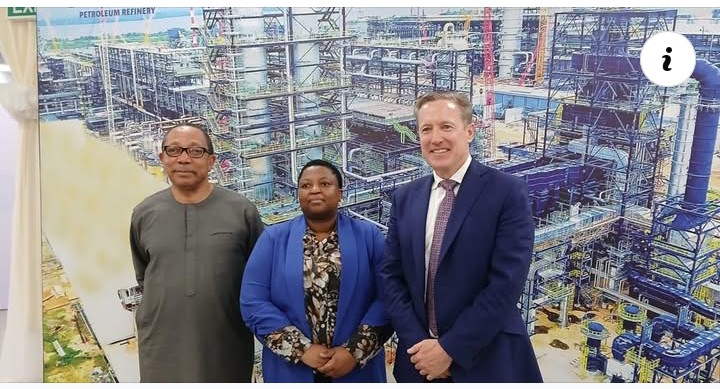
The Dangote Petroleum Refinery has dismissed claims that it imports refined petroleum products, stating that all petrol and other fuels sold from its facility are fully refined in Nigeria.
Speaking at a news conference in Lagos on Wednesday, the Chief Executive Officer of the refinery, Mr David Bird, said the allegations misunderstood standard refinery operations. He explained that substances sometimes mistaken for imported fuel are actually intermediate feedstocks used to optimise production.
According to Bird, such materials include high catalytic sulphur gasoline and straight-run naphtha, which are unfinished components that undergo further processing at the Lekki refinery before becoming finished products.
“We do not import refined fuel. Everything sold as petrol, diesel or aviation fuel is refined here in Lekki to Nigerian and international Euro-V standards,” he said.
Bird noted that the use of intermediate feedstocks is common practice in complex refineries worldwide, including those in the United States, the United Kingdom, Singapore and India. He added that the Dangote Refinery operates as a merchant refinery, sourcing various crude oil and feedstock grades mainly by sea rather than directly from pipelines.
This flexibility, he said, allows the refinery to maximise the use of its advanced processing units and convert all inputs into high-value, cleaner fuels and petrochemicals.
The refinery boss accused some oil marketers and regulatory actors of undermining Nigeria’s local refining efforts by importing cheaper, sub-standard fuel while failing to support domestically refined products. Such actions, he warned, could endanger the country’s energy security and strain foreign-exchange reserves.
Bird disclosed that the refinery currently supplies about 45 million litres of petrol daily to the domestic market and did not export petrol during the Christmas and New Year period. He said exports only occur when local demand is limited or supply exceeds domestic needs, especially during the early stages of operations.
He also highlighted the public health benefits of local refining, noting that fuels now consumed in Nigeria have significantly lower sulphur and metal content, comparable to products used in Europe and North America.
Describing the facility as one of the most modern and automated refineries in the world, Bird said it produces high-value products such as petrol, diesel, aviation fuel and polypropylene.
Reaffirming the company’s long-term commitment, he said the refinery would continue to prioritise local demand while positioning Nigeria as a regional hub for clean, world-class fuels.
“West Africa should no longer be a dumping ground for inferior products. Nigeria deserves—and now produces—the best,” he said.