




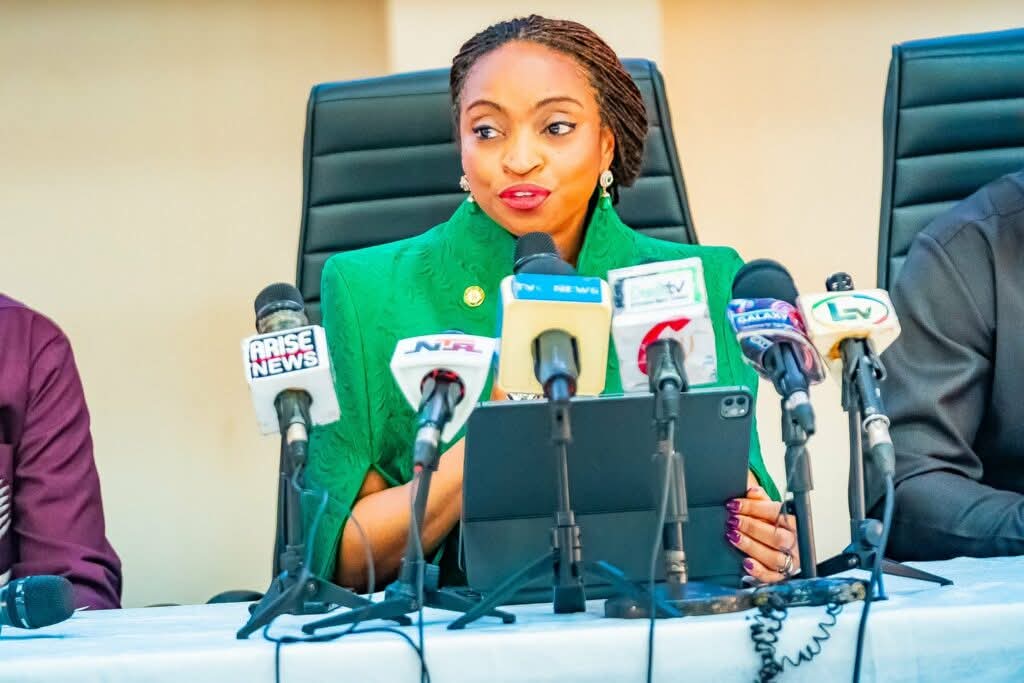
The Federal Government earned more than $500 million from exports in 2025, the Minister of Industry, Trade and Investment, Dr Jumoke Oduwole, has disclosed.
Oduwole made this known on Monday while defending the ministry’s 2026 budget proposal before the Senate Committee on Trade and Investment.
She said the revenue resulted from industrial development initiatives and the government’s push to diversify the economy, noting that the ministry’s programmes also created over 20,000 direct jobs during the year.
According to the minister, activities on the Nigeria Commodity Exchange recorded significant growth, with traded volumes increasing by more than 500 per cent. She added that the ministry facilitated a strategic partnership aimed at establishing a national trade and distribution company to strengthen structured commodity trading and expand market access.
Oduwole further revealed that the Federal Executive Council approved the National Industrial Policy in November 2025, while Nigeria’s first National Intellectual Property Policy was also launched and approved within the year.
On funding, she said the ministry’s 2025 budget allocation stood at N11.8 billion, with personnel and overhead costs fully utilised. However, only N3.8 billion was allocated for capital expenditure, and no funds had been released for capital projects as of the time of her appearance.
She noted that the ministry exceeded its revenue target by about N100 million, which was fully remitted to the Consolidated Revenue Fund, adding that fiscal discipline and accountability were maintained despite limited resources.
Outlining plans for 2026, the minister said the ministry’s priorities align with the National Development Plan and existing trade, investment and industrial policies. She explained that focus would be placed on implementing industrial policies through targeted value chains, industrial clusters and special economic zones, with an emphasis on boosting local production and non-oil exports.
Oduwole said domestic investors would remain central to the government’s strategy, while foreign investors would continue to be engaged through trade missions and investment visits. She added that the ministry would also expand trade engagement at the sub-national level through zonal and state-based initiatives.
The minister disclosed that the proposed capital allocation for the ministry in 2026 is N2.72 billion but described it as inadequate to meet programme and project demands. She therefore appealed to the Senate committee to consider increasing the allocation to enable the ministry to effectively carry out its mandate.