



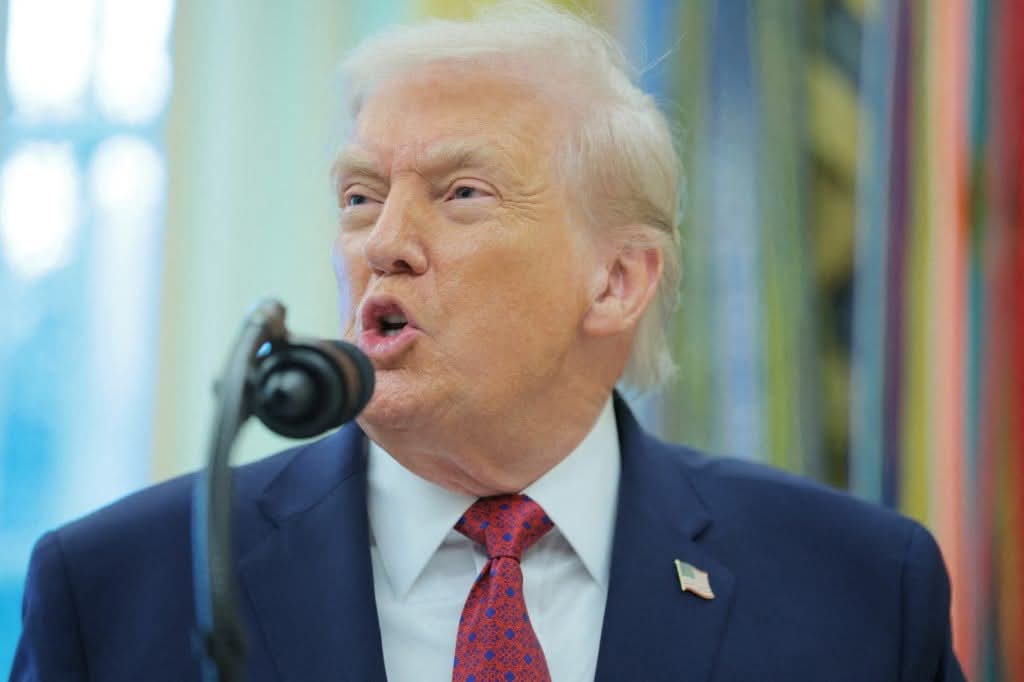
U.S. President Donald Trump announced Friday that he is sending a second aircraft carrier group to the Middle East, warning that it would be a “bad day for Iran” if the country fails to reach a deal on its nuclear program.
Speaking at the White House, Trump confirmed that the USS Gerald R. Ford would be deployed from the Caribbean, joining an already substantial U.S. naval presence in the region.
“In case we don’t make a deal, we’ll need it,” Trump said. “It’ll be leaving very soon. We have one out there that just arrived. If we need it, we’ll have it ready — a very big force.”
Trump expressed optimism about ongoing nuclear talks with Iran but emphasized the consequences of failure. “If they’re not [successful], it’s going to be a bad day for Iran, very bad,” he added.
The U.S. had already sent the USS Abraham Lincoln, part of a fleet of 12 Navy ships stationed in the Middle East. The four vessels led by the Ford, currently in the Caribbean after operations in Venezuela, are not expected to return to their home ports until late April or early May, according to The New York Times.
Heightened Tensions Amid Domestic Crackdown
The move comes after Iran’s security forces violently suppressed protests last month, with rights groups reporting thousands of deaths. While Trump’s statements focused on Iran’s nuclear ambitions rather than the human rights situation, opposition figures like Reza Pahlavi, son of the former shah, have called on Iranians to continue chanting anti-regime slogans alongside international demonstrations.
UN nuclear watchdog chief Rafael Grossi described negotiations on Iran’s nuclear facilities as “possible but terribly difficult.” Last week, Iran and the United States held talks in Oman, but no dates have been set for future discussions.
Regional Reactions
Israeli Prime Minister Benjamin Netanyahu, who met Trump in Washington this week, said the U.S. president believes a “good deal” could be reached. However, Netanyahu voiced skepticism, noting that any agreement would need to address Iran’s ballistic missiles and regional influence.
The U.S. previously conducted military strikes on Iranian nuclear facilities during a brief conflict in June, signaling the potential for future action if negotiations fail.
Human Rights Situation
The crackdown in Iran has seen over 53,000 arrests, with hundreds of protesters facing possible execution, according to rights groups. Human Rights Activists News Agency reported 7,005 deaths, though the true toll may be higher. Several reformist politicians were recently detained but have since been released on bail.