


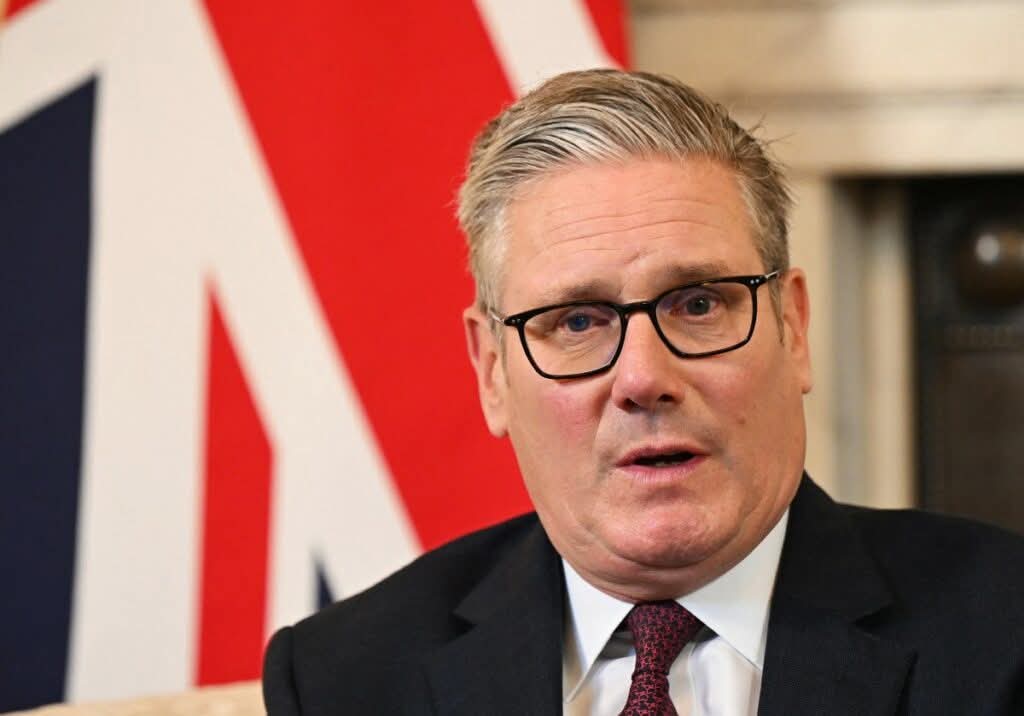
British Prime Minister, Keir Starmer, has called on European nations to reduce their heavy reliance on the United States for security, advocating a stronger, more autonomous defence framework within NATO.
Speaking on Saturday at the Munich Security Conference, Starmer stressed the need for what he described as a “more European NATO,” anchored on deeper defence and security cooperation between the UK and its continental partners.
Addressing concerns over Russia’s growing threat, Starmer declared that Britain and Europe’s security are inseparable. “There is no British security without Europe, and no European security without Britain,” he said, describing the transatlantic alliance as vital but in need of recalibration.
While acknowledging the United States as an “indispensable ally” that has made an unmatched contribution to European defence, the Prime Minister argued that Europe must move towards greater interdependence and shared responsibility. According to him, enhanced burden-sharing would strengthen NATO rather than weaken ties with Washington.
Starmer criticised Europe’s fragmented defence industry, noting that poor coordination and lengthy procurement processes have created capability gaps in some areas and duplication in others. He called for historic increases in defence spending and closer industrial integration across the continent.
Highlighting Britain’s contributions, he said UK firms account for more than a quarter of Europe’s defence industrial base and employ about 239,000 people nationwide. He pledged to combine Britain’s strengths in defence technology and artificial intelligence with European partners to boost production capacity and efficiency.
Describing Europe as a “sleeping giant,” Starmer pointed out that the continent’s combined economies far exceed Russia’s but often fail to translate that advantage into cohesive military strength.
He also announced that the UK’s defence budget will reach record levels, with £270 billion allocated during the current parliamentary term — the largest increase since the Cold War.
The Prime Minister cited ongoing defence cooperation projects, including a £10 billion frigate supply agreement with Norway, an £8 billion Typhoon fighter jet deal with Turkey, and joint missile development efforts with Germany, Italy and France.
On the political front, Starmer warned against rising ideological extremism across Europe. He cautioned that both far-left and far-right movements often share scepticism toward NATO and adopt softer stances on Russia.
According to him, failure to build public support for necessary security decisions could allow extremist voices to fill the gap. “The future they offer is one of division and capitulation,” he warned, pledging that Europe would not allow its democratic values to erode.
Concluding his address, Starmer urged European nations to take responsibility for their own security, saying unity and resolve are essential to safeguard democracy, liberty and the rule of law in an increasingly volatile world.