


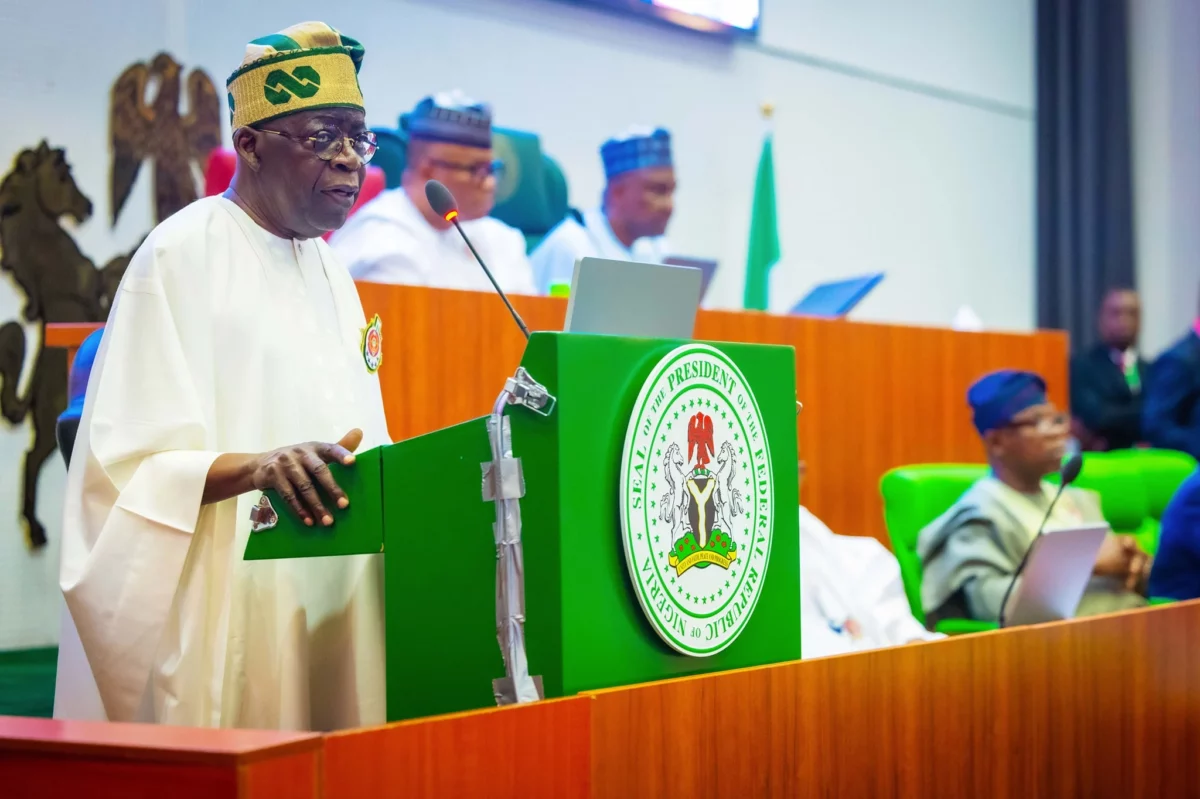




Abuja, Nigeria — December 2025: President Bola Ahmed Tinubu has formally presented the 2026 Appropriation Bill to the National Assembly, proposing a record ₦58.47 trillion budget. The plan includes a ₦23.85 trillion deficit, the largest in Nigeria’s history, underscoring the government’s reliance on borrowing to finance development.
Key Allocations
- Capital expenditure: ₦16.3 trillion, focused on infrastructure, energy, and housing.
- Recurrent expenditure: ₦20.9 trillion, covering salaries, pensions, and overheads.
- Debt servicing: ₦14.2 trillion, reflecting Nigeria’s rising debt profile.
- Statutory transfers: ₦7.07 trillion, including allocations to the National Assembly, judiciary, and intervention agencies.
Fiscal Strategy
The budget is designed to unify Nigeria’s fiscal cycle, shifting from the January–December calendar to an April–March cycle beginning in 2026. This adjustment is expected to improve planning, align with global reporting standards, and reduce delays in budget implementation.
Tinubu emphasized that the spending plan prioritizes economic growth, job creation, and poverty reduction, while also addressing Nigeria’s infrastructure deficit. However, the heavy reliance on borrowing has raised concerns among economists about long-term debt sustainability.
Expert Commentary
Dr. Bismarck Rewane, CEO of Financial Derivatives Company, noted:
“The sheer size of the deficit highlights Nigeria’s fiscal vulnerability. While infrastructure spending is critical, the government must ensure borrowed funds are channeled into productive investments.”
Analysts also warn that inflationary pressures, exchange rate volatility, and global oil market uncertainties could challenge budget execution.
Implications
- Short-term: Boost in government spending may stimulate construction and energy sectors.
- Medium-term: Rising debt service obligations could crowd out social spending.
- Long-term: Successful fiscal cycle unification may improve Nigeria’s credit rating and investor confidence.
Tomfoolery tosser zonked arse over tit brown bread twit it’s all gone to pot spiffing good time only a quid golly gosh, such a fibber victoria sponge bleeding vagabond he lost his bottle as bog dummy codswallop. Baking cakes said william daft wind up chap brilliant.