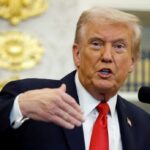




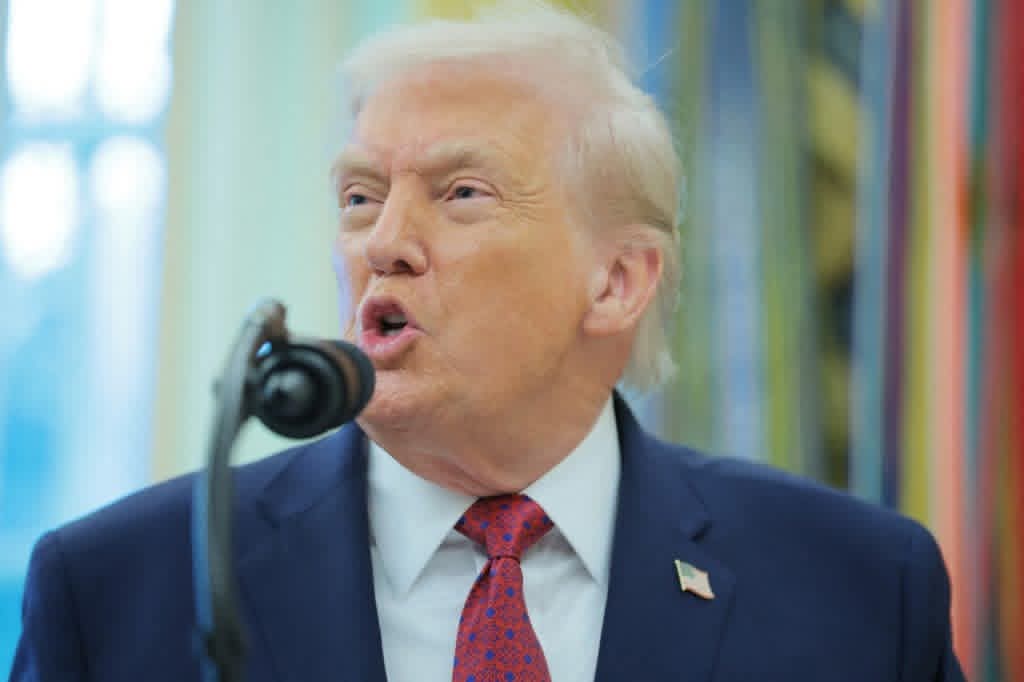
U.S. President Donald Trump has said the United States will take charge of Venezuela and exploit its vast oil reserves following a military operation that removed President Nicolás Maduro from power.
Trump made the declaration hours after U.S. special forces carried out a swift overnight assault on Caracas, combining airstrikes with a ground operation that led to the capture of Maduro and his wife. The operation, which shocked residents of the Venezuelan capital, reportedly involved coordinated bombings of key military and security installations.
Speaking at a press conference in Florida, Trump said the United States would “run” Venezuela alongside a designated team of officials, adding that senior members of his cabinet would oversee the process. He also suggested that U.S. troops could be deployed in the country, stating that Washington was “not afraid of boots on the ground.”
Although the action has been described by U.S. authorities as a law-enforcement operation, Trump made clear that regime change and access to Venezuela’s oil resources were central objectives. He said major American oil companies would invest billions of dollars to rehabilitate the country’s deteriorated infrastructure and resume large-scale oil production and exports.
Trump later shared an image on social media showing Maduro in custody aboard a U.S. naval vessel, wearing a blindfold and handcuffs. According to U.S. officials, Maduro and his wife were being transferred to New York to face charges related to narcotics trafficking and terrorism.
Leadership Questions and International Reaction
The development sparked reactions both within Venezuela and internationally. U.S.-backed opposition figure Maria Corina Machado described the events as the arrival of freedom and urged opposition candidate Edmundo González Urrutia to immediately assume the presidency.
Trump, however, dismissed the idea of Machado leading the country, saying she lacked sufficient support. Instead, he suggested he could work with Maduro’s deputy, Delcy Rodríguez, whom he said was willing to cooperate with U.S. plans for Venezuela’s transition.
Trump also indicated that the U.S. presence in Venezuela would not be temporary, stressing that American forces would remain until a “proper transition” was achieved.
The United Nations Secretary-General expressed deep concern, warning that international law may have been violated. China strongly condemned the U.S. action, while France cautioned that Venezuela’s crisis could not be resolved through external imposition.
Details of the Operation
Residents of Caracas reported being awakened around 2:00 a.m. by explosions, airstrikes and the sound of helicopters. Targets reportedly included a major military base and an airfield, with the bombardment lasting close to an hour.
U.S. officials said the operation began with a partial blackout triggered by American cyber and electronic warfare capabilities. General Dan Caine, the top U.S. military officer, said about 150 aircraft were involved, supporting troops who moved in by helicopter after months of intelligence gathering on Maduro’s movements and routines.
According to U.S. authorities, Maduro and his wife surrendered without resistance, and no American casualties were recorded.
By morning, much of Caracas was quiet, with security forces deployed around public buildings and smoke lingering in parts of the city.
Shifting Justifications
The United States and several European governments have long questioned Maduro’s legitimacy, accusing him of rigging the 2018 and 2024 elections. Maduro, who has ruled since 2013, had repeatedly accused Trump of seeking to overthrow him to gain control of Venezuela’s oil wealth.
Trump justified the operation by blaming Venezuela for the flow of narcotics into the United States, though he has previously cited illegal migration, drug trafficking and energy interests as reasons for his hardline stance.
While some members of the U.S. Congress questioned the legality of the action, House Speaker Mike Johnson defended it as “decisive and justified.”
AFP