












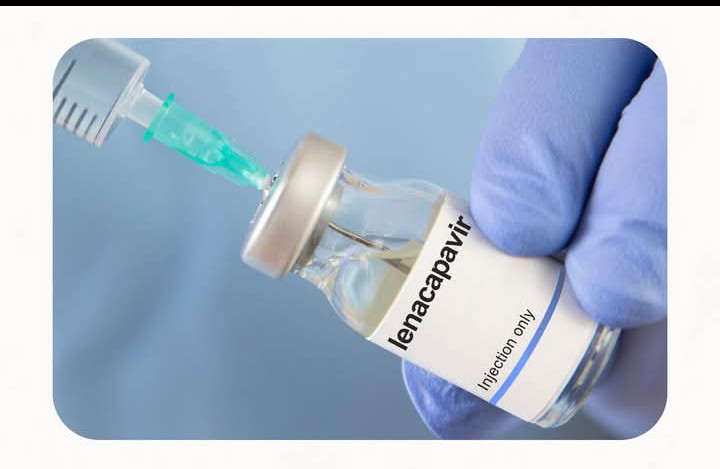
The Nigerian government has announced plans to introduce a long-acting HIV prevention injection, Lenacapavir, as part of efforts to eliminate HIV/AIDS as a public health threat by 2030.
The Minister of State for Health and Social Welfare, Iziaq Salako, disclosed this during a media briefing in Abuja organised by the National HIV, Viral Hepatitis and STDs Control Programme under the Federal Ministry of Health and Social Welfare.
Salako revealed that about 52,000 doses of the injectable drug have already been secured to support the initial phase of the rollout, which is expected to begin in January 2026. Nigeria is among nine countries selected by the Global Fund as early adopters of Lenacapavir for pre-exposure prophylaxis (PrEP).
He said the initiative reflects the government’s commitment under President Bola Tinubu to strengthen the country’s HIV response through innovation, expanded prevention strategies, and increased domestic funding.
According to him, the introduction of the injection marks a major shift from daily oral PrEP, which has faced adherence challenges, especially among high-risk groups. Lenacapavir is administered once every six months, making it a more convenient prevention option.
Nigeria currently has the second-largest HIV burden globally, with about 1.9 million people living with the virus, according to data from the National Agency for the Control of AIDS. Although infection rates have declined in recent years, new cases remain a significant concern.
Public health experts have identified prevention as a weak point in the country’s HIV response, citing stigma, limited access, and poor adherence to daily medication as key barriers.
Salako described the new injection as a significant advancement, particularly for vulnerable and high-risk populations, noting that it expands the country’s HIV prevention options.
Also speaking, the National Coordinator of the National AIDS and STDs Control Programme, Adebobola Bashorun, said efforts are underway to expand access to the drug across more states. He added that the government is exploring additional funding to increase supply and reach more at-risk populations.
Bashorun clarified that the injection will complement existing HIV prevention methods rather than replace them, adding that national guidelines will determine how it is integrated into current programmes.
On safety, he said reported side effects have been mild, mostly limited to pain at the injection site, with ongoing monitoring in place.
Salako further noted that the rollout is being implemented in partnership with the Global Fund, with plans to explore local production and long-term sustainability strategies.
He added that discussions around technology transfer and domestic manufacturing would be key to reducing reliance on foreign support and ensuring continued access to HIV prevention tools.