












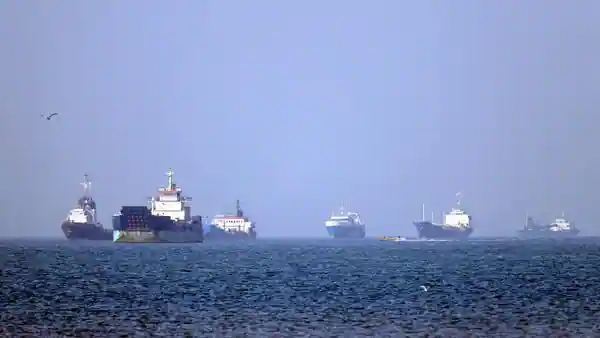
The United States military has intercepted several Iranian missiles and drones targeting both US naval assets and commercial ships, while also destroying multiple Iranian boats in the Strait of Hormuz, according to a senior American commander.
Admiral Brad Cooper, head of US Central Command (CENTCOM), disclosed on Monday that US Apache and Seahawk helicopters struck six Iranian vessels deemed a threat to maritime traffic in the strategic waterway.
He added that US forces successfully neutralised all incoming missiles and drones aimed at both American warships and commercial vessels, stressing that the operation ensured the safety of shipping in the region.
The confrontation comes amid heightened tensions following the launch of a US-led mission known as “Project Freedom,” announced by President Donald Trump, to safeguard commercial navigation through the Strait of Hormuz — a crucial global route for oil and gas exports.
According to Cooper, while some Iranian cruise missiles were directed at US Navy ships, a larger number of drones and projectiles were aimed at commercial vessels. Despite the attacks, US forces maintained what he described as a defensive shield over both military and civilian ships.
President Trump, in a post on his Truth Social platform, claimed that up to seven Iranian boats were destroyed and stated that no major disruptions had occurred in the strait, except for a South Korean vessel reportedly struck during the incident.
The US military clarified that it is not directly escorting ships but has deployed a layered defence system involving warships, aircraft, surveillance systems, and electronic warfare capabilities to secure the passage.
The current escalation follows earlier clashes that began in late February, after US and Israeli forces launched military actions against Iran. In response, Iran moved to shut down the Strait of Hormuz, prompting further US operations aimed at reopening and securing the route.
Iranian state media earlier reported that its navy fired missiles and deployed drones near US destroyers in what it described as a warning signal.
CENTCOM confirmed that two US guided-missile destroyers have since passed through the strait into the Gulf, while two US-flagged commercial vessels have safely transited in the opposite direction.
Officials say the priority for now is to ensure the safe exit of vessels from the region, with plans to eventually establish a two-way shipping corridor.
As of late April, maritime data indicated that more than 900 commercial ships were present in the Gulf, highlighting the global significance of maintaining stability in the waterway.