








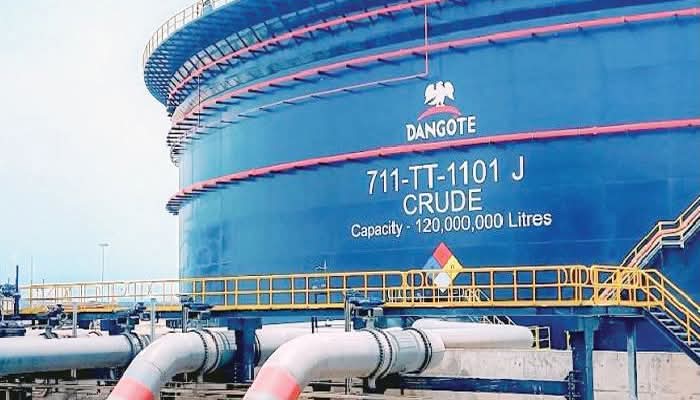
Dangote Refinery has increased the ex-depot price of Premium Motor Spirit (petrol) to ₦1,350 per litre, marking another upward adjustment in its pricing structure.
The latest hike, confirmed on Wednesday by a senior refinery official and data from Petroleumprice.ng, represents a ₦75 increase from the previous rate of ₦1,275 per litre. This is the second ₦75 increment within a week, highlighting a pattern of frequent price changes in recent times.
According to sources within the refinery, the new pricing has been implemented across all loading points, prompting marketers to immediately revise their depot prices in response to tightening supply and rising operational costs.
“This adjustment reflects current market realities, including supply constraints and increasing costs,” a senior official explained, noting that the revised template has already taken effect nationwide.
The price increase follows a similar adjustment just days earlier, when the refinery moved prices from ₦1,200 to ₦1,275 per litre. Despite these increases, officials within the Dangote Group have indicated that the refinery has been absorbing part of the cost by subsidising petrol and diesel supplied to the local market.
Industry players also linked the latest hike to a recent temporary suspension in the issuance of pro forma invoices, which led to short-term supply shortages and further pressured prices upward. Combined with fluctuations in global crude oil prices and logistics expenses, these factors have continued to influence pricing decisions.
Over the past month, Dangote Refinery has adjusted petrol prices multiple times, reflecting shifts in crude sourcing costs, foreign exchange challenges, and domestic distribution factors. While there had been a brief price reduction earlier due to competition and stock levels, the trend has since reversed amid tighter supply and stronger global oil prices.
The ongoing price changes point to a transitional phase in Nigeria’s deregulated fuel market, where local refining is gradually replacing imports but remains sensitive to global cost dynamics.
The latest increase is expected to push pump prices higher across the country, as marketers transfer the added costs to consumers. For many Nigerians already dealing with inflation and rising transport fares, the development is likely to further increase the cost of living.