









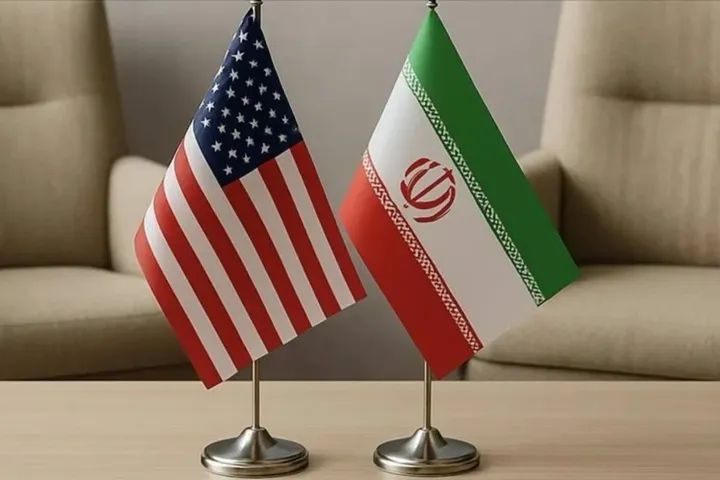
Tensions between the United States and Iran have flared once again after both countries exchanged military strikes, with Tehran accusing Washington of violating a recently agreed peace deal aimed at ending the Middle East conflict.
The latest confrontation followed US airstrikes on Iranian missile and drone storage facilities as well as coastal radar installations. The US military said the operation was carried out in response to what it described as Iranian attacks on a commercial cargo ship transiting the Strait of Hormuz, claiming Tehran had breached the ceasefire agreement.
However, Iran rejected the US explanation, insisting the American strikes violated the memorandum of understanding that had been signed to end hostilities. The Iranian Foreign Ministry condemned the attacks, describing them as a blatant breach of the peace agreement.
In retaliation, Iran’s Revolutionary Guards launched strikes against US positions in the Gulf region, warning that any further military action by Washington would trigger a much stronger response.
The growing hostilities also affected neighbouring Bahrain, whose government reported that several Iranian drones targeted the country early Saturday. Bahraini authorities strongly condemned the attacks, accusing Iran of undermining ongoing regional peace efforts.
Meanwhile, Iranian state media reported an explosion near the southern port city of Sirik after what military officials described as a projectile impact. Despite the incident, authorities maintained that port operations continued normally and no damage was recorded.
US President Donald Trump earlier criticised Iran over the reported drone attack on a commercial vessel in the Strait of Hormuz, calling it a reckless violation of the ceasefire. Vice President JD Vance also warned that any further aggression from Iran would be met with a decisive response.
Although Iran has warned vessels against using the Strait of Hormuz without its approval, international shipping has continued, with some ships taking alternative routes. The strategic waterway remains vital, handling nearly one-fifth of global oil and gas exports.
Despite renewed military tensions, global oil prices have fallen amid optimism that shipping through the Strait of Hormuz will remain largely uninterrupted.
In a separate diplomatic development, Israel and Lebanon signed a US-mediated framework agreement aimed at reducing tensions along their shared border. The deal includes plans for Lebanese troops to gradually assume control of two areas currently occupied by Israeli forces and outlines a process to disarm Hezbollah.
US Secretary of State Marco Rubio described the agreement as an important step towards achieving lasting peace and stability in the region.
Israeli Prime Minister Benjamin Netanyahu welcomed the agreement, saying it would strengthen Israel’s security while allowing the Lebanese Army to take over designated areas. However, he noted that Israeli forces would remain in certain security zones until Hezbollah is fully disarmed.
Lebanese President Joseph Aoun described the agreement as a significant first step towards restoring displaced civilians to their communities under the authority of the Lebanese government. However, supporters of Hezbollah staged protests in Beirut, arguing that the deal could weaken efforts to resolve the wider regional conflict.
Meanwhile, the International Atomic Energy Agency (IAEA) has stressed that any permanent agreement between the US and Iran must include strict verification measures to ensure Tehran does not develop nuclear weapons.
IAEA Director General Rafael Grossi said Iran has repeatedly stated that it has no intention of pursuing nuclear weapons, but emphasised that international inspectors must be allowed to verify those claims through a robust monitoring system. He added that the interim agreement provides for Iran’s stockpile of enriched uranium to be reduced under the agency’s supervision.