





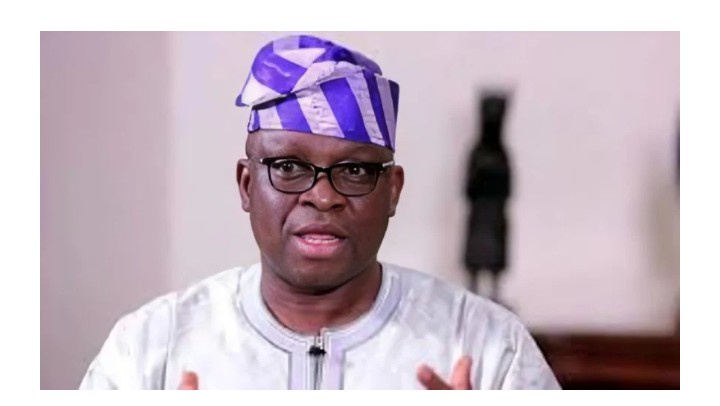
Former Ekiti State Governor, Ayo Fayose, has said that the Federal Government would be capable of taking an election by force if it genuinely decided to do so, insisting that there would be little anyone could do to prevent such an outcome.
Fayose made the statement while speaking on the outcome of the August 15, 2026, Osun State governorship election during an interview with TVC News.
The former governor, who disclosed that he stayed in Osogbo throughout the election period, said he visited markets and several communities across the state to gauge the mood of voters ahead of the poll.
According to him, his interactions with residents indicated that the election would be closely contested and could have gone either way.
“I was in Osogbo firstly to have information about how that election was going to go with the ordinary folks. I was in a number of market communities. I was in Ilesa and a couple of communities, and I listened to them,” Fayose said.
He explained that the information he gathered from residents convinced him that the eventual outcome would not be entirely unexpected, although he did not predict the precise margin of victory.
Fayose described the contest as a close election, saying either Governor Ademola Adeleke or his opponent could have emerged victorious.
“When you have an election that is 52, 48, it could go either way,” he said, contrasting such a contest with an election in which one candidate enjoys a much wider advantage.
The former governor, however, condemned the violence and killings that reportedly occurred around the election, describing them as unnecessary and unfortunate.
“But what greeted the election towards the end was unfortunate violence, desperation, and killings that were mostly unnecessary,” Fayose said.
He also analysed Adeleke’s 66,000-vote margin, arguing that a substantial portion of the difference came from Ede, widely regarded as the political stronghold of the Adeleke family.
According to Fayose, about 46,000 votes of the winning margin came from Ede, while other parts of the state accounted for the remaining difference.
He said the strong performance recorded by Adeleke in Ede was not surprising because of the long-standing support enjoyed by the Adeleke family in the area.
Fayose maintained that the figures from other locations, including Ilesa and Osogbo, further demonstrated how closely fought the election was.
He consequently congratulated Adeleke on his victory and urged him to demonstrate magnanimity by reaching out to political opponents and other stakeholders in the state.
Fayose said reconciliation should go beyond the Accord Party and involve all stakeholders across Osun State.
“Be magnanimous in victory. The language now must be right. Reconciliation must be total, not with the Accord alone, but with all other stakeholders,” he said.
Fayose backs Wike’s position on FG influence
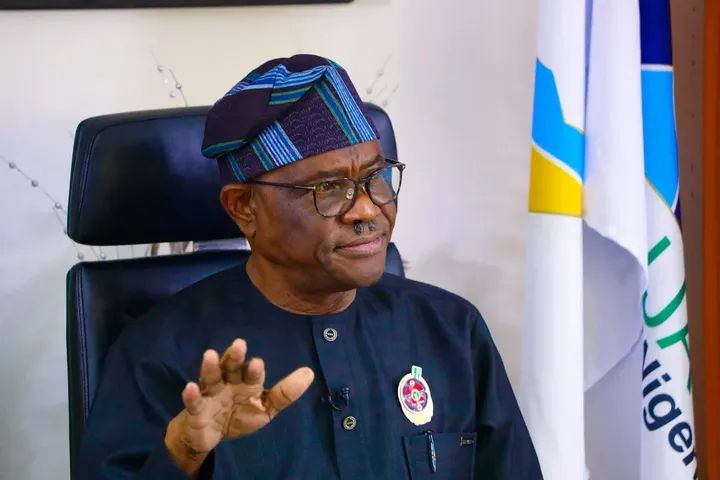
Fayose also reacted to comments by the Minister of the Federal Capital Territory, Nyesom Wike, who had suggested that the Accord Party’s performance in the Osun election was possible because President Bola Tinubu allowed the process to remain free and fair.
Fayose appeared to agree with Wike’s position.
Addressing allegations that the Federal Government could have influenced the election, the former Ekiti governor said governments that genuinely decide to take control of an election can deploy significant power to achieve their objective.
“The only thing I hear towards the election was the Federal Government would take it by force. I want to say to you, if the Federal Government wants to take an election, they will take it,” Fayose said.
He added that his experience of previous elections had shown him that when a government is determined to control an electoral process, it can be extremely difficult for others to stop it.
His comments come after the Osun governorship election in which incumbent Governor Ademola Adeleke secured another term in office.
Fayose’s remarks have added another dimension to the post-election debate, particularly regarding the closeness of the contest, the role of political strongholds and allegations of government influence in Nigeria’s electoral process.