



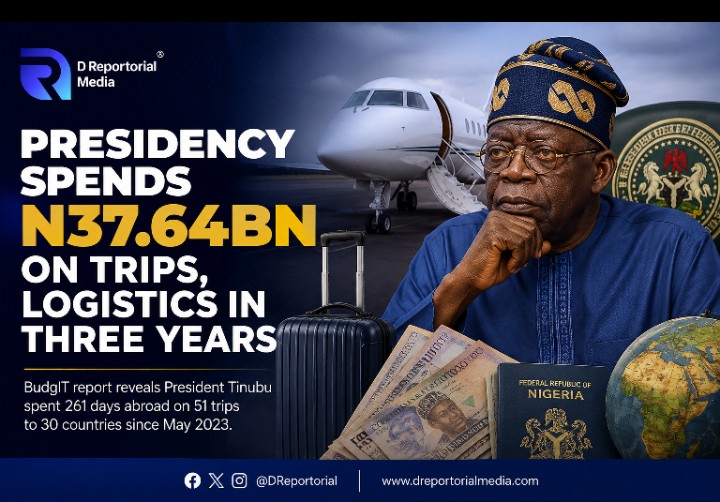
The Presidency reportedly spent a total of N37.64 billion on presidential trips, logistics, foreign exchange and other travel-related expenses between June 2023 and April 2026, according to an analysis of government spending data by civic-tech organisation BudgIT.
The expenditure, obtained through the GovSpend platform, reportedly covered various costs associated with domestic and international travels by the Presidency during the period under review.
According to the analysis, the highest annual expenditure was recorded in 2024, when N25.26 billion was reportedly spent on presidential travel-related activities.
The figures have renewed discussions about the cost of governance, particularly the expenses associated with official foreign trips and the management of public resources.
Tinubu Spent 261 Days Abroad
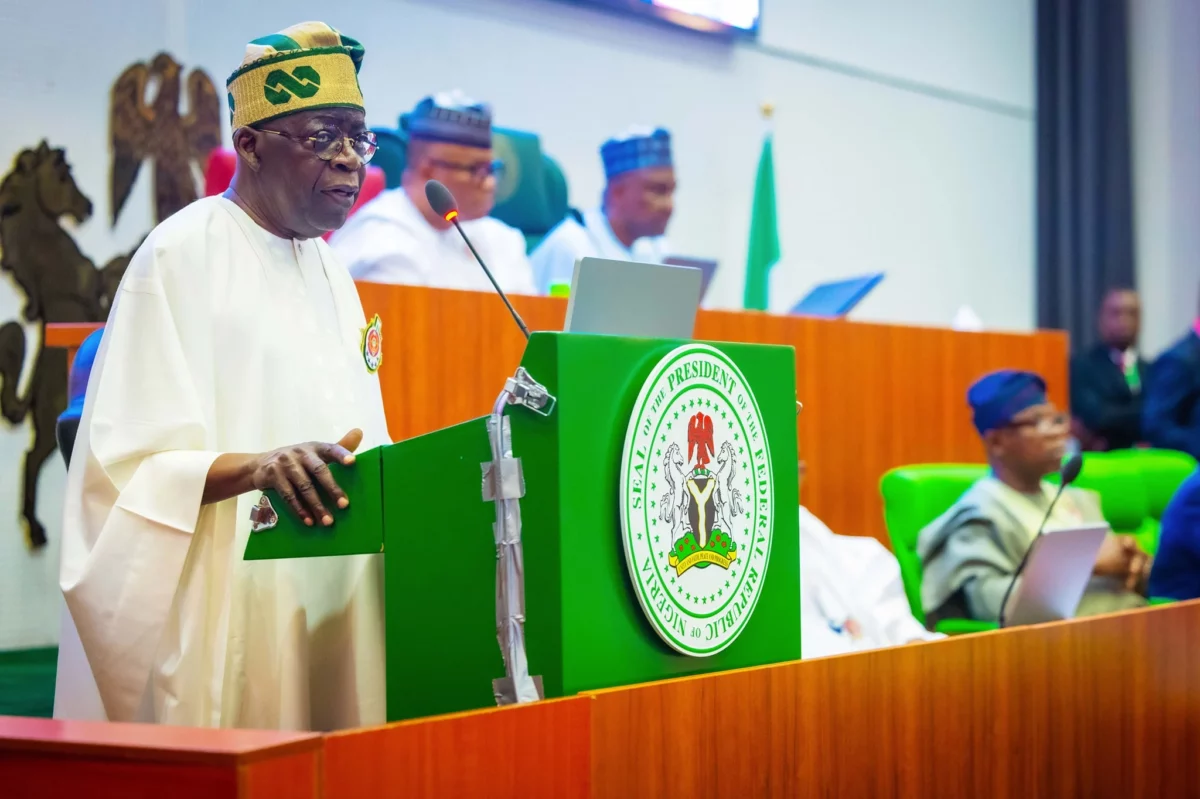
The report further stated that President Bola Tinubu spent approximately 261 days outside Nigeria on 51 foreign trips since assuming office in May 2023.
The trips reportedly took the President to at least 30 countries, where he attended international summits, bilateral meetings, diplomatic engagements, investment forums and other official events.
Presidential travels are generally undertaken as part of Nigeria’s diplomatic and economic engagements, with the Presidency often maintaining that such trips are necessary to attract investments, strengthen international relations and advance the country’s interests.
However, the reported number of days spent outside the country has continued to generate public debate, especially amid concerns over the cost of governance and the economic difficulties faced by many Nigerians.
First Lady’s Overseas Trips
The BudgIT analysis also reportedly revealed that N700.7 million was released for overseas trips involving First Lady Oluremi Tinubu between 2023 and 2024.
The expenditure adds another dimension to the ongoing debate over the financial implications of official travels by top government officials and their entourages.
Civil society organisations and public accountability advocates have repeatedly called for greater transparency in government expenditure, particularly spending that involves foreign travel, logistics and other administrative costs.
Growing Calls for Accountability
The reported N37.64 billion expenditure is likely to fuel renewed calls for the government to provide detailed explanations of the expenses and demonstrate how the spending aligns with the administration’s broader efforts to reduce the cost of governance.
Nigeria has faced significant economic challenges in recent years, including high inflation, rising living costs and pressure on household incomes. Against this backdrop, spending on official travel has attracted heightened public attention.
Supporters of the administration could argue that presidential travel is an essential part of diplomacy and governance, while critics may question whether the scale and cost of some trips represent value for money.
The debate ultimately centres on transparency, accountability and prudent management of public funds.
BudgIT’s analysis of GovSpend data provides an insight into government expenditure, but the figures also underscore the importance of detailed public disclosure on what individual travel expenses cover, including transportation, accommodation, security, logistics, foreign exchange and official delegations.
As scrutiny of government spending continues, Nigerians are expected to demand clearer information on how public resources are being deployed and whether such expenditure delivers measurable benefits to the country.