





POLITICS AND GOVERNANCE
1. Tinubu receives State Police Bill after approval by all 36 states

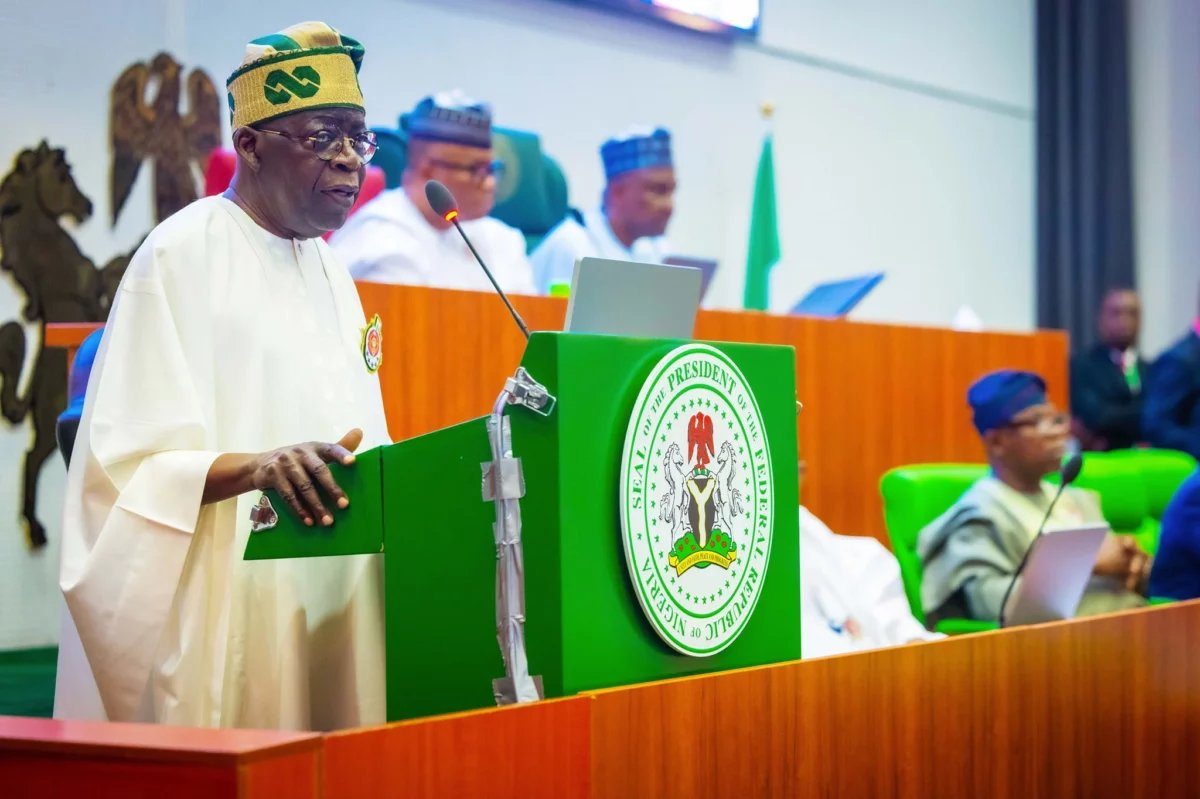
President Bola Tinubu has received the constitutional amendment bill seeking to establish state police in Nigeria following its approval by all 36 State Houses of Assembly.
The development represents a major step towards restructuring Nigeria’s policing system, which has operated predominantly under a centralised federal structure.
The President’s Chief of Staff, Femi Gbajabiamila, confirmed that the bill was formally transmitted to Tinubu by the National Assembly’s liaison officials.
The President is expected to review the legislation in consultation with the Attorney-General of the Federation, Lateef Fagbemi, before deciding on assent.
The Senate and House of Representatives had earlier passed the amendment in June and July 2026 respectively. Approval by all 36 state assemblies exceeds the constitutional requirement of 24 states.
Why it matters: State police could improve local intelligence gathering, community security and responses to kidnapping, banditry and other crimes. However, questions remain about funding, accountability, political interference and the protection of citizens’ rights.
The proposed national policing legislation will also be important in determining how the system operates.
2. Jonathan warns Nigeria could face serious crisis after 2027 elections

Former President Goodluck Jonathan has warned that Nigeria could face a serious political crisis after the 2027 general elections if political intolerance, violence and declining confidence in democratic institutions are not urgently addressed.
Jonathan made the warning at the 2026 Goodluck Jonathan Foundation Peace Conference in Abuja.
He expressed concern that political parties and campaign organisations were increasingly treating political opponents as enemies rather than competitors in a democratic contest.
According to him, the growing tendency to exploit ethnic and religious divisions for electoral advantage could threaten national unity.
He also raised concerns about public confidence in the judiciary, warning that when citizens lose faith in the courts, they may resort to self-help.
The former President called on political leaders, religious institutions, traditional rulers and other influential stakeholders to promote tolerance and peaceful political participation.
Why it matters: With the 2027 elections approaching, Jonathan’s warning highlights the importance of credible elections, responsible political communication and the prevention of violence.
3. Senate threatens electoral consequences over political violence

The Nigerian Senate has intensified its response to growing political violence ahead of the 2027 general elections, warning politicians and candidates against activities capable of undermining the electoral process.
The warning comes amid reports of attacks and confrontations involving political supporters and campaign groups.
Senate President Godswill Akpabio and other lawmakers have stressed the need for accountability, while the Senate has called for investigations into attacks involving political leaders.
The growing tension has also generated exchanges between the ruling All Progressives Congress and opposition groups, with allegations and counter-allegations over responsibility for political intimidation.
Why it matters: Electoral violence can discourage voters, threaten political participation and undermine confidence in democratic institutions. Security agencies and INEC will face increasing pressure to ensure peaceful campaigns and credible elections.
4. Adewole Adebayo promises to end Boko Haram insurgency within three months

Social Democratic Party presidential candidate Prince Adewole Adebayo has promised to end the Boko Haram insurgency within three months if elected President in the 2027 general elections.
Adebayo’s declaration has attracted attention as political parties begin to position their candidates around national security, economic recovery and governance.
The Boko Haram insurgency has remained one of Nigeria’s most persistent security challenges, particularly in Borno, Yobe and Adamawa states.
Thousands of people have lost their lives, while millions have experienced displacement, disrupted education, damaged livelihoods and humanitarian hardship.
Although Adebayo has made an ambitious commitment, the practical details of the proposed strategy, including military operations, intelligence gathering, rehabilitation and reintegration programmes, will be important in assessing the promise.
Why it matters: Security is expected to remain a major issue in the 2027 presidential election. Nigerians will want candidates to explain not just what they intend to achieve but how they plan to achieve it.
SECURITY AND NATIONAL SAFETY
5. Three killed in Jigawa farmers-herders clash

A violent confrontation between suspected herders and local farmers in Garki Local Government Area of Jigawa State has reportedly claimed three lives and left two others injured.
The incident occurred at about 3:30 a.m. on Wednesday at Wauta Fulani settlement in Rafin Marke Ward, Kanya District.
According to the Nigeria Security and Civil Defence Corps, the confrontation reportedly began when a group of herders, moving with approximately 200 cattle from the Babura axis, entered a guinea corn farm belonging to a local farmer.
The farmers allegedly attempted to drive the cattle away to protect their crops, leading to an attack.
During the initial confrontation, one farmer, identified as Amiru Saleh, was killed, while two others sustained injuries.
A subsequent reprisal reportedly resulted in the deaths of two members of the herding group.
Security operatives have been deployed to the affected community to prevent further violence.
Why it matters: Farmers-herders conflicts continue to threaten food production, rural livelihoods and community security. The incident reinforces the need for effective conflict-resolution mechanisms, livestock management and stronger rural security.
6. Senate demands prosecution of officers over deaths of 37 miners in Niger State

The Senate has called on the Federal Government to prosecute or appropriately sanction officers found culpable in the deaths of 37 young artisanal miners who died while in the custody of the Nigeria Security and Civil Defence Corps in Minna, Niger State.
The deaths occurred on September 17, 2026, following the arrest of the victims during an operation against suspected illegal mining activities.
The incident generated widespread public outrage and raised serious questions about the treatment of detainees by security agencies.
An independent investigative committee established by the Federal Government reportedly completed its investigation and submitted recommendations identifying operational failures.
The report recommended sanctions against culpable officers, institutional reforms and compensation for the families of the deceased.
The Senate has now called for the immediate implementation of the recommendations.
Lawmakers also resolved to send a delegation to visit the bereaved families and directed relevant committees to monitor the implementation of the recommendations.
Why it matters: The incident raises important questions about human rights, detention conditions and accountability within Nigeria’s security institutions. The demand for justice also reinforces the principle that suspects must be treated with dignity and are presumed innocent until proven guilty.
7. Nigerian Army arrests suspected ammunition supplier in Kogi

The Nigerian Army has arrested a suspected ammunition supplier in Kogi State and recovered 300 rounds of ammunition allegedly concealed inside a sack of beans.
The suspect, identified as 47-year-old Umaru Muhammad, was reportedly arrested at approximately 9:30 p.m. on Tuesday by troops of the Atsawa Blocking Force working with local vigilantes.
According to the Army, the arrest followed intelligence concerning the movement of ammunition.
Preliminary interrogation reportedly indicated that the ammunition was intended for two individuals identified as Gimba and Dare, said to reside in Gori village along the River Niger corridor in Lokoja.
The Army also recovered a motorcycle, a mobile phone and ₦30,500 from the suspect.
The suspect remains in military custody while investigations continue to establish the extent of the alleged supply network.
The Army has not independently established the alleged involvement of the two individuals mentioned during preliminary interrogation.
Why it matters: The arrest highlights the importance of disrupting ammunition supply networks that may support kidnapping, armed robbery and other criminal activities.
ECONOMY, FINANCE AND BUSINESS
8. Nigeria’s inflation rate drops to 14.06 per cent in October

Nigeria’s annual headline inflation rate declined to 14.06 per cent in October 2026, compared with 14.63 per cent recorded in September, according to figures released by the National Bureau of Statistics.
Food inflation also declined from 19.59 per cent to 19.13 per cent during the period.
The latest figures indicate a gradual moderation in the country’s inflationary pressures after several months of elevated prices.
The development comes amid continuing efforts by the Federal Government and the Central Bank of Nigeria to stabilise the economy through monetary and fiscal reforms.
However, the decline in inflation does not mean that prices have returned to previous levels. It means that prices are increasing at a slower rate.
For ordinary Nigerians, the cost of food, transportation, electricity, housing and other essential services remains a major concern.
Why it matters: The inflation figures could influence the Central Bank’s next monetary policy decision, particularly as its Monetary Policy Committee prepares to meet. A possible interest-rate reduction could support borrowing and investment, although inflation risks remain.
9. CBN and NNPC sign agreement to strengthen foreign exchange inflows and energy financing

The Central Bank of Nigeria and the Nigerian National Petroleum Company Limited have signed an agreement aimed at strengthening cooperation in foreign exchange inflows, energy financing and the development of Nigeria’s oil and gas assets.
The agreement was announced on Wednesday, November 18, 2026.
The partnership is expected to improve coordination between the country’s monetary authorities and its national oil company, particularly in areas involving foreign currency earnings and investment in the energy sector.
Nigeria’s oil and gas industry remains an important source of foreign exchange, government revenue and economic activity.
However, challenges involving production capacity, investment, infrastructure and revenue management have continued to affect the sector.
The agreement is expected to provide a framework for closer institutional cooperation, although specific implementation measures have not yet been fully disclosed.
Why it matters: Stronger coordination between the CBN and NNPC could help improve foreign exchange management, support energy investments and strengthen Nigeria’s external reserves position.
10. Dangote Refinery increases IPO target to $2.1 billion after strong investor demand

The Dangote Petroleum Refinery is planning to increase the size of its proposed initial public offering to approximately $2.1 billion following strong investor demand.
According to reports, subscriptions for the offering reached approximately ₦6 trillion, equivalent to about $4.5 billion, significantly exceeding the initial share offer.
The company is considering increasing the number of shares available to investors by up to 30 per cent, subject to regulatory approval.
The proposed adjustment could increase the shares offered from approximately 4.1 billion to as many as 5.33 billion.
The refinery, owned by billionaire industrialist Aliko Dangote, is one of Africa’s largest industrial projects and a major component of Nigeria’s ambition to strengthen domestic petroleum refining capacity.
The planned listing is expected to provide an opportunity for Nigerian and international investors to acquire an ownership stake in the business.
Why it matters: A successful IPO could deepen Nigeria’s capital market, attract investment into the energy sector and provide additional funding for the refinery’s expansion. It could also give ordinary Nigerians an opportunity to participate in one of the country’s largest industrial businesses.
EDUCATION AND SOCIAL DEVELOPMENT
11. Covenant University retains Africa’s top position in Times Higher Education rankings

Covenant University in Ota, Ogun State, has retained its position as Africa’s highest-ranked institution in the 2027 Times Higher Education Interdisciplinary Science Rankings.
The university is ranked jointly 49th globally, making it the only African university among the world’s top 50 institutions in the ranking for the second consecutive year.
Nigeria also recorded a significant improvement in its representation, with 27 universities featuring in the 2027 ranking, compared with 18 in the previous edition.
This represents a 50 per cent increase in the number of Nigerian institutions included.
The development was announced in Abuja by the Chairman of the Nigerian Tertiary Education Ranking Advisory Committee, Professor Emeritus Peter Okebukola.
The ranking recognises universities’ contributions to interdisciplinary research and their ability to bring different academic disciplines together to address complex global challenges.
Why it matters: Covenant University’s performance strengthens Nigeria’s visibility in global higher education and demonstrates the potential of Nigerian institutions to compete internationally in research, innovation and academic excellence.
12. Enugu Assembly passes bill to protect tenants against arbitrary rent increases

The Enugu State House of Assembly has passed the Landlord and Tenant Amendment Bill, aimed at protecting tenants from arbitrary rent increases, excessive agency charges and unfair eviction practices.
The bill followed concerns raised by residents over the difficulties associated with securing rented accommodation and the financial pressure imposed by landlords and property agents.
According to Okey Mbah, Chairman of the Joint Committee responsible for considering the legislation, the proposed provisions would restrict landlords from increasing rent within the first four years.
Subsequent increases would be limited to two per cent of the annual rent, while increases resulting from modifications or renovations would be subject to a separate limit.
The bill also contains provisions for a bond arrangement under which tenants would deposit 10 per cent of their annual rent into an account managed by the Office of the Attorney-General.
The amount is expected to be refunded without interest when tenants vacate the property, subject to the law’s conditions.
The Speaker of the Assembly, Uche Ugwu, said the legislation was intended to improve tenants’ welfare while maintaining an enabling environment for investment in the housing sector.
Why it matters: Rising rent and housing costs have become major concerns for Nigerian families, particularly low- and middle-income earners. If enacted and properly implemented, the legislation could offer tenants greater protection against exploitation.
ELECTIONS AND NATIONAL DEVELOPMENT
13. INEC receives 78,112 PVCs for distribution across Enugu State

The Independent National Electoral Commission has received 78,112 newly produced Permanent Voter Cards for distribution across the 17 Local Government Areas of Enugu State.
The Resident Electoral Commissioner, Dr Chukwuemeka Chukwu, announced the development during a briefing in Enugu.
The cards were received in three batches:
- First batch: 17,220 PVCs.
- Second batch: 20,137 PVCs.
- Third batch: 40,755 PVCs.
INEC has urged eligible registrants to visit their respective local government offices to collect their cards.
The commission also warned that PVC collection by proxy would not be permitted, stressing that cards must be released to their rightful owners.
Why it matters: With the 2027 general elections approaching, PVC collection remains essential to voter participation. Political parties, community leaders and civil society organisations have been encouraged to sensitise residents about the importance of collecting their cards.
14. Truck accident kills nine, injures 46 in Cross River State

At least nine people have died while 46 others sustained injuries following a serious road accident involving a commercial truck in Cross River State.
The accident occurred around the Yahe Bridge area along the Yahe-Akamkpa road in Yala Local Government Area.
According to the Federal Road Safety Corps, the vehicle, a DAF truck with registration number GAS706XA, was carrying 85 occupants when the accident happened.
The FRSC said the driver reportedly lost control after attempting to avoid a head-on collision with another truck approaching from the opposite direction.
The vehicle subsequently veered off the road into the bush.
Rescue operations were conducted by FRSC personnel with assistance from Nigerian Army officers.
Forty-six injured passengers were evacuated to Lutheran Hospital in Yahe for medical attention, while nine deaths were confirmed.
The truck was also reportedly carrying goods, including palm oil, refrigerators and motorcycles.
Why it matters: The tragedy raises renewed concerns about the dangerous practice of conveying excessive numbers of passengers in commercial trucks, speeding and poor road safety compliance.
The FRSC and other relevant authorities face renewed pressure to strengthen enforcement and prevent avoidable road fatalities.