









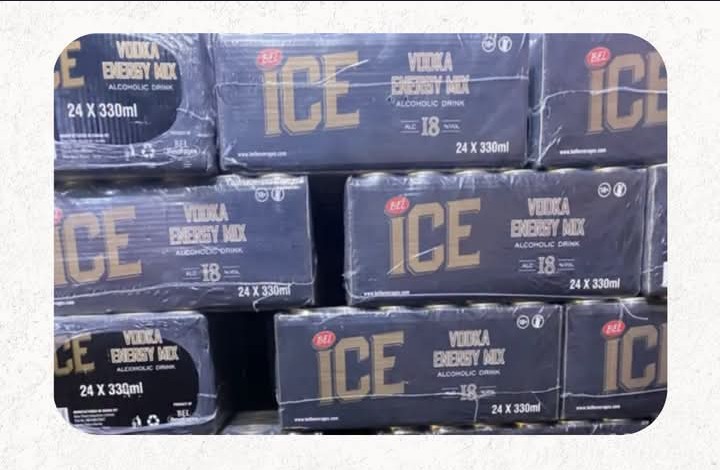
The National Agency for Food and Drug Administration and Control (NAFDAC) has warned Nigerians against the importation, distribution and sale of two alcoholic energy drinks banned in Ghana, following their seizure by Ghanaian authorities.
In a public alert issued on Friday, the agency said it received official notification from the Ghana Food and Drugs Authority that about 140 boxes of the products were confiscated during enforcement operations in Ghana’s Upper East Region.
According to NAFDAC, the drinks had earlier been prohibited in Ghana because of the health risks associated with combining alcohol and stimulant ingredients commonly found in energy drinks.
The affected products are Bel Ice Vodka Energy Drink, manufactured by Bel Beverages in Ghana, and Cody’s Vody Energy Mix, produced by Jens Warneke Export GmbH in Bremen, Germany. The agency said the warning applies to all batches of both products.
NAFDAC explained that alcoholic energy drinks pose significant health risks because the stimulant content can mask the effects of alcohol intoxication, making consumers feel less impaired than they actually are.
The agency noted that this false sense of alertness may encourage excessive alcohol consumption and increase the likelihood of risky behaviour.
It added that young adults and adolescents are particularly vulnerable, with potential health effects including impaired judgment and coordination, increased risk-taking behaviour, elevated heart rate and blood pressure, dehydration, sleep disturbances, and a greater risk of alcohol-related accidents and injuries.
To prevent the products from entering the Nigerian market, NAFDAC said it has commenced post-market surveillance and intensified regulatory monitoring nationwide.
The agency warned that anyone found importing, distributing or selling the affected products would face regulatory sanctions.
It also directed importers, distributors, wholesalers and retailers to ensure the drinks are neither imported into nor sold anywhere in Nigeria.
NAFDAC further urged businesses to verify that beverages in circulation meet its registration and regulatory requirements before offering them for sale.
Members of the public were encouraged to report any suspected sightings of the products to the nearest NAFDAC office and to promptly report any adverse health effects linked to their consumption.
The latest alert forms part of the agency’s ongoing efforts to curb the circulation of unregistered, counterfeit and unsafe food and beverage products, amid growing concerns over the cross-border movement of hazardous consumer goods in West Africa.