


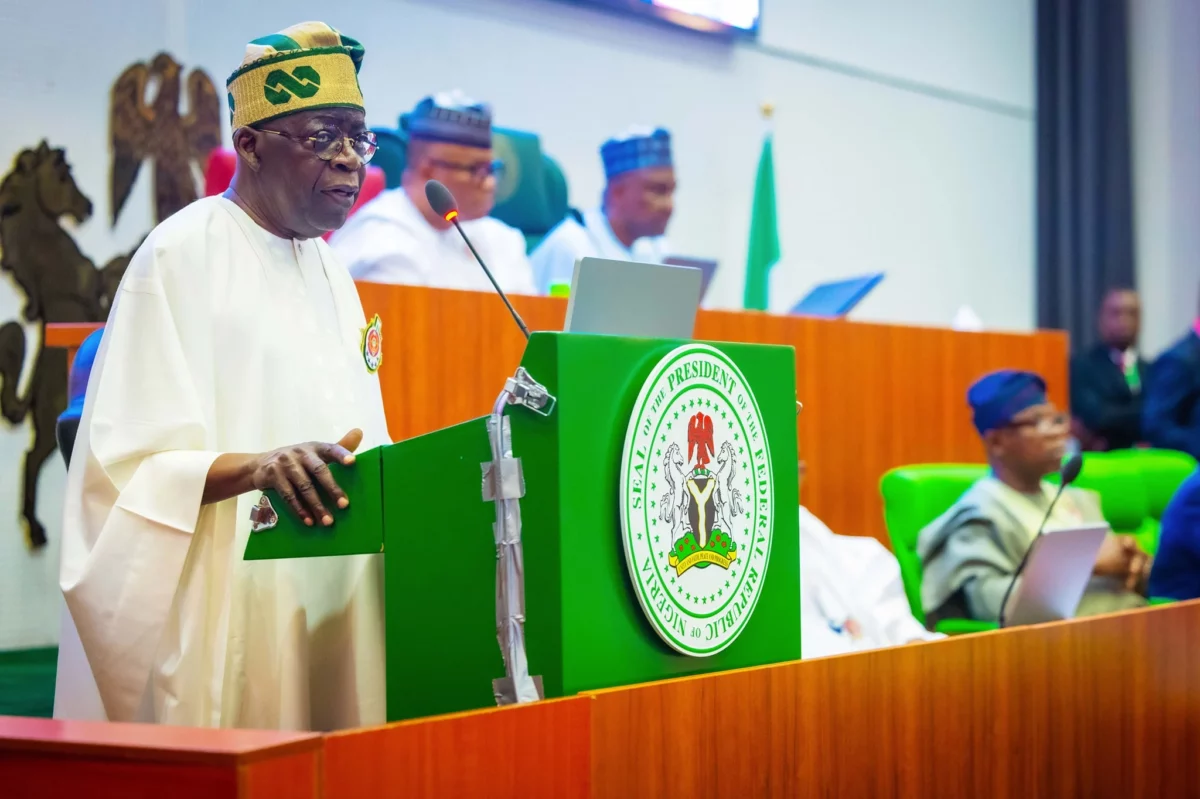








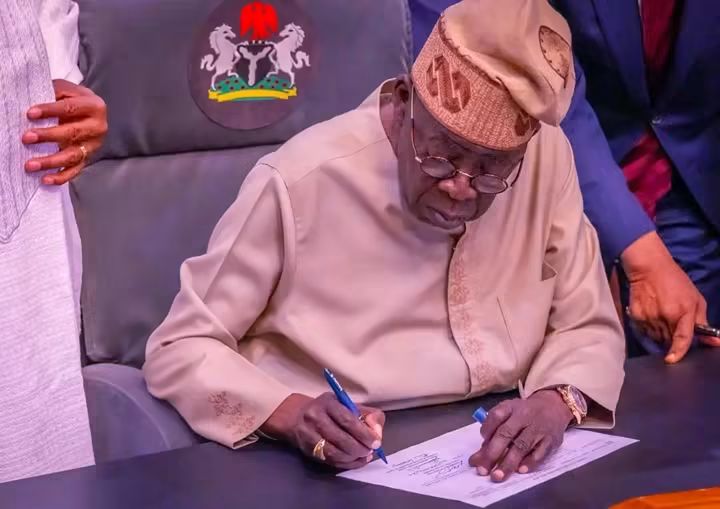
President Bola Tinubu has signed an executive order introducing a coordinated regulatory framework for virtual assets in Nigeria, assigning key oversight responsibilities to the Central Bank of Nigeria (CBN), the Nigeria Revenue Service (NRS), and the Securities and Exchange Commission (SEC).
The Presidency announced on Friday that the Presidential Executive Order on Virtual Assets Coordination, 2026 takes immediate effect. According to a statement by the President’s Special Adviser on Information and Strategy, Bayo Onanuga, the initiative is designed to improve coordination among regulators, protect investors from fraud, promote responsible innovation, and strengthen oversight of the fast-growing digital asset industry.
The government explained that the rapid expansion of cryptocurrencies and other virtual assets has blurred the distinction between currencies, commodities, securities, and payment systems, creating regulatory gaps that have been exploited by fraudulent operators.
The statement noted that poor coordination among regulatory agencies has exposed Nigeria to risks such as money laundering, terrorism financing, cybercrime, fraud, and revenue losses, with many unsuspecting Nigerians losing money to unregistered investment schemes.
To tackle these challenges, the executive order establishes a Virtual Asset Council, chaired by the CBN, with the NRS and SEC serving as vice-chairs. Other members include the Nigerian Financial Intelligence Unit (NFIU) and the Office of the National Security Adviser (ONSA).
The council will provide policy direction, coordinate regulatory efforts, and work with the Attorney-General of the Federation to develop a unified legal and institutional framework for virtual assets.
A Virtual Asset Office will also be established within the CBN to coordinate information sharing, applications, and reporting among participating agencies.
The Presidency clarified that the new framework does not create a new regulatory agency or reduce the statutory powers of existing institutions. Instead, it is intended to improve collaboration while allowing each agency to retain its legal responsibilities.
Under the framework, the SEC will continue regulating virtual assets classified as securities, while the CBN will oversee payment systems, settlement, custody services, and other non-security virtual assets. In cases where jurisdiction is unclear, the Virtual Asset Council will determine the appropriate regulator.
The Federal Government also revealed that the CBN is preparing to launch a regulatory sandbox that will allow approved firms to test blockchain technologies, cryptocurrency products, and other digital innovations under regulatory supervision before they enter the broader market.
Officials said the initiative is expected to encourage innovation while ensuring that new products meet regulatory standards before being made available to the public.
In addition, the Nigeria Revenue Service is developing a dedicated tax policy for the virtual assets sector to clarify the application of existing tax laws and improve compliance.
The government also disclosed that work is nearing completion on a Virtual Assets White Paper, which will outline Nigeria’s long-term strategy for the industry.
Meanwhile, the newly established Virtual Asset Council has been directed to produce a harmonised implementation framework within 30 days to facilitate the execution of the presidential order.