

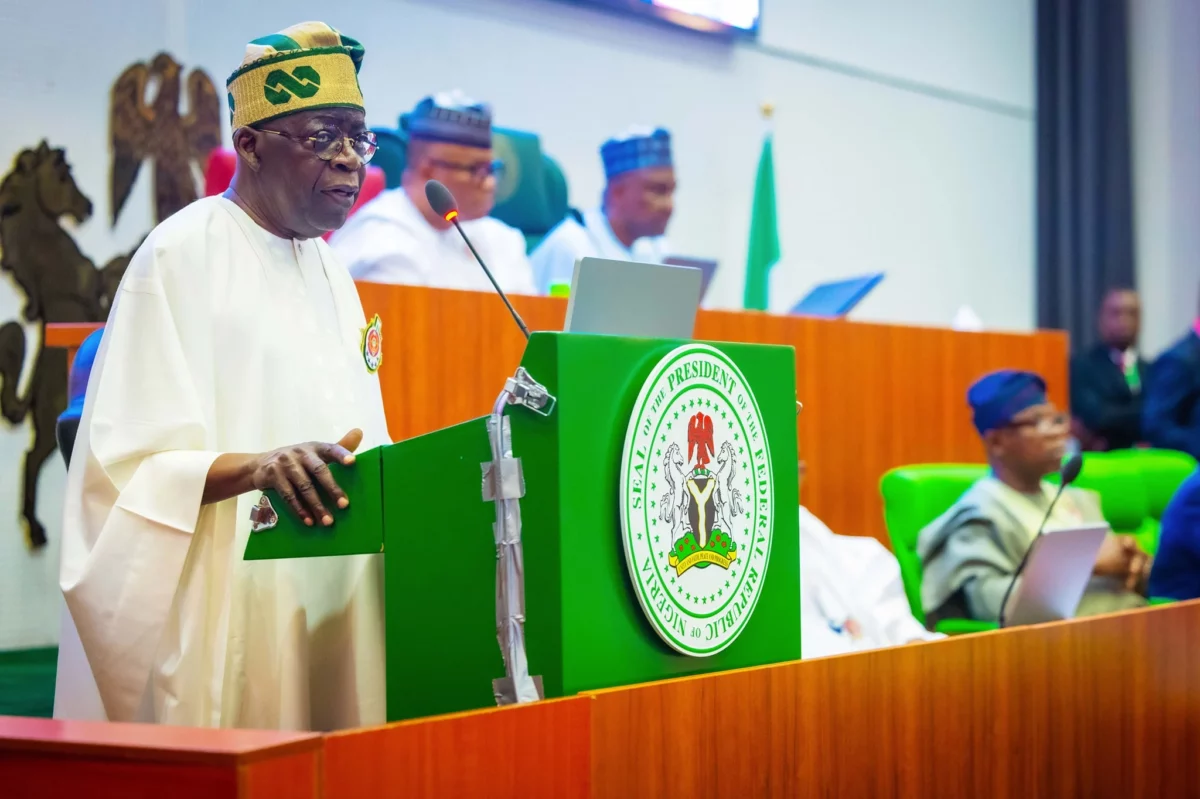







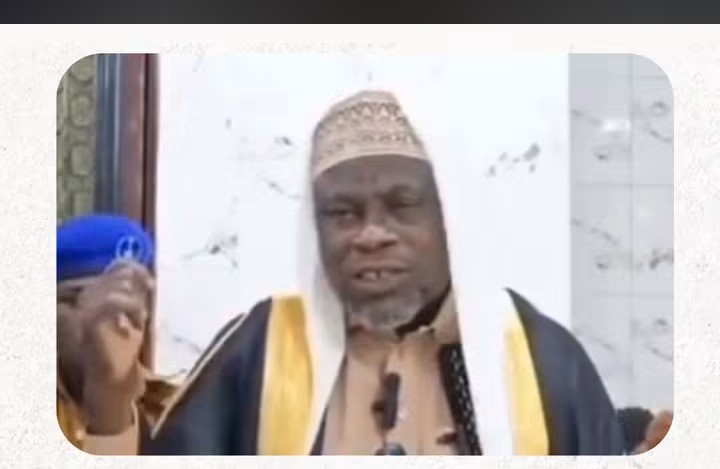
Islamic scholar Malam Abdulrahman Nuhu Almaliky has defended the Muslim-Muslim leadership of President Bola Tinubu and Vice President Kashim Shettima, saying he would rather endure hardship under a Muslim leader than enjoy material comfort under a non-Muslim leader.
Almaliky, a member of the leadership of Jama’atu Izalatil Bid’ah Wa Iqamatis Sunnah, made the remarks in a sermon while addressing debates surrounding Muslim political leadership in Nigeria.
“For me, having a Muslim as leader while I eat grass is better than having an infidel as leader while I eat chicken every day,” he said.
The cleric argued that Muslim leadership provides what he described as religious benefits, claiming that some issues that could negatively affect Islam would be prevented or concealed under a Muslim-Muslim administration.
He said many Muslims had yet to fully appreciate what he considered the religious advantages of having Muslims occupy key political positions.
“This is something your minds have not considered. People will say we are working for someone, but who is that person? We are not campaigning for Tinubu; we are campaigning for Islam,” Almaliky said.
Hardship and Religious Conduct
Almaliky also rejected the suggestion that the hardship experienced by Nigerians could be attributed entirely to government policies.
According to him, some people who complain about economic difficulties are themselves involved in conduct prohibited by Islam, including alleged mistreatment of parents and same-sex relationships.
His comments have the potential to generate further controversy, particularly because of his description of non-Muslim leadership and his reference to Christians and others using the term “infidels.”
Background to the Controversy
Almaliky’s comments came amid a wider debate sparked by remarks attributed to Islamic cleric Sheikh Sani Yahaya Jingir, who has publicly advocated Muslim-Muslim political tickets.
Jingir previously called on Muslims to support Muslim-Muslim candidates and urged his followers to obtain their Permanent Voter Cards ahead of future elections.
Speaking at an event tagged “Abba Go Again” in support of Kano State Governor Abba Kabir Yusuf, Jingir described himself as a strong supporter of Muslim-Muslim political arrangements.
“I am among the staunch advocates of the Muslim-Muslim ticket, and I call on you to come together for Muslim-Muslim ticket,” he said.
Jingir acknowledged opposition to the arrangement from Christians and other religious groups but questioned whether advocating for Muslim candidates amounted to wrongdoing.
He further declared: “But as a Muslim, I repeat it, Muslim-Muslim! No going back on this.”
The cleric also encouraged Muslims at the event to obtain their voter cards, while making controversial comments about non-Muslims and the religious composition of Nigeria’s electorate.
His remarks subsequently attracted criticism from Nigerians and groups who described them as inflammatory and potentially harmful to religious harmony.
Muslim-Muslim Ticket Remains Divisive
The Muslim-Muslim ticket adopted by Tinubu and Shettima ahead of the 2023 presidential election generated intense national debate.
Supporters of the arrangement argued that political competence, experience and electoral considerations should take precedence over religious balancing. Critics, however, raised concerns about religious inclusion, representation and the need to reflect Nigeria’s religious diversity in national leadership.
Almaliky’s latest comments have added a fresh dimension to the debate, particularly his assertion that he would choose a Muslim leader despite hardship over a non-Muslim leader under whom he might enjoy greater material comfort.
As of the time of this report, there was no public response from the Presidency or Sheikh Nurul Khalil to Almaliky’s remarks.