



🌍 1. Oil Surges Above $100 as U.S.–Iran Conflict Escalates
Global oil markets have been thrown into fresh turmoil after Brent crude climbed above $100 per barrel, reaching levels not seen since July.
The increase is being driven largely by escalating military tensions between the United States and Iran, alongside attacks affecting shipping and energy infrastructure in the wider Middle East.
The Strait of Hormuz, one of the world’s most strategically important oil-shipping routes, has become a major source of concern. Any prolonged disruption could significantly reduce the amount of crude reaching international markets.
Brent settled around $101.21 per barrel, while U.S. crude rose to about $96.05. The increase has already begun affecting financial markets, with investors worried that higher energy costs could reignite inflation.
The consequences could extend far beyond the Middle East. Higher crude prices generally translate into increased costs for fuel, transportation, electricity, manufacturing and food production, putting additional pressure on households and businesses worldwide.
🇺🇸🇮🇷 2. U.S.–Iran Conflict Raises Fears of Wider Middle East War
Tensions between Washington and Tehran remain one of the world’s biggest geopolitical flashpoints.
Recent military actions involving Iranian forces and attacks on shipping have heightened fears that the conflict could spread further across the region.
The situation has also become linked to developments in Yemen and Saudi Arabia, where Iran-backed Houthi forces have attacked Saudi energy infrastructure. Saudi Arabia has responded with airstrikes in Yemen.
The biggest international concern is the possibility of a prolonged disruption to oil exports through the Gulf.
Analysts warn that if the disruption continues, crude prices could rise considerably further, increasing inflationary pressure across major economies.
📉 3. Global Stock Markets Fall as Oil Passes $100
The Middle East crisis is already affecting financial markets.
On Wednesday, the Dow Jones Industrial Average fell 0.77%, the S&P 500 dropped 0.48%, while the Nasdaq declined 0.64%.
European markets also weakened as investors assessed the possibility that higher energy prices could keep inflation elevated and make it more difficult for central banks to cut interest rates.
Energy companies were among the beneficiaries of higher crude prices, but many other sectors came under pressure because expensive oil increases operating and transportation costs.
The concern is particularly significant for countries heavily dependent on imported energy.
🇺🇦🇷🇺 4. Ukraine War: Trump and Putin Discuss Possible End to Conflict
U.S. President Donald Trump and Russian President Vladimir Putin held a phone conversation as Washington continues efforts to find a way toward ending the Russia-Ukraine war.
The Kremlin said Putin assured Trump that Russia does not have aggressive plans toward Europe.
Meanwhile, American envoys Jared Kushner and Steve Witkoff have been involved in diplomatic efforts between Washington, Moscow and Kyiv. Ukrainian President Volodymyr Zelenskyy has welcomed the diplomatic initiative while continuing to seek stronger Western military support.
However, the diplomatic efforts have not stopped fighting.
Russia has resumed heavy missile and drone attacks against Ukraine, while Ukraine continues its own strikes against Russian targets.
The war has now entered another critical phase, with both sides trying to improve their positions while diplomatic efforts continue.
🇬🇧🇮🇱 5. Israel Retaliates Against Britain Over West Bank Sanctions
A major diplomatic dispute has erupted between Israel and the United Kingdom following Britain’s decision to impose sanctions targeting Israeli settlements in the occupied West Bank.
Britain has banned imports from illegal Israeli settlements and imposed sanctions on companies and individuals linked to settlement expansion.
Israel has strongly condemned the measures.
In retaliation, Israel announced steps targeting Britain, including plans involving the British consulate in East Jerusalem and restrictions affecting British diplomatic activities.
The dispute represents a significant deterioration in relations between two countries that have historically maintained close ties.
Several other Western countries, including France and Canada, have also backed measures against Israeli settlement activities.
🇮🇱🇬🇧 6. Israeli Figures Welcome Britain’s Settlement Sanctions
Interestingly, not everyone in Israel has rejected Britain’s action.
Several prominent Israeli figures have publicly welcomed the sanctions, arguing that the government’s settlement policy has damaged Israel’s international standing.
Former Israeli Prime Minister Ehud Olmert is among those who have praised the British move.
The dispute has therefore exposed a growing divide within Israel over settlement expansion, relations with Western countries and the future of the Palestinians.
🇸🇦🇾🇪 7. Houthi Attacks on Saudi Energy Infrastructure Deepen Oil Crisis
Iran-backed Houthi forces in Yemen have attacked Saudi energy facilities, adding another dangerous dimension to the wider Middle East conflict.
The attacks have increased fears that the crisis could affect not only oil production but also shipping routes connecting the Middle East with Europe and Asia.
Saudi Arabia has responded militarily, with airstrikes against Houthi targets in Yemen.
The development is particularly significant because Saudi Arabia is one of the world’s largest oil producers.
Any sustained damage to its energy infrastructure could have immediate consequences for international oil prices.
🇺🇸 8. Trump’s Republican Party Begins Midterm Election Push
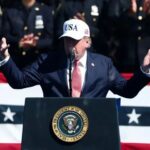
In the United States, Republicans have opened their 2026 midterm election convention in Dallas, with President Donald Trump playing a major role in rallying the party.
Trump is using the event to reinforce Republican unity ahead of November’s elections.
The president has also addressed the economic consequences of rising oil prices and the continuing conflict with Iran.
Democrats, meanwhile, are accusing Republicans of threatening democratic institutions and worsening economic pressures.
The November midterm elections are expected to be an important test of Trump’s political strength during his current presidency.
🤖 9. AI Raises Fresh Concerns About Humanity’s Future
Artificial intelligence is also generating major international debate.
Researchers and technology experts are increasingly discussing the possibility that increasingly capable AI systems could create serious risks if their development is not properly controlled.
The debate has moved beyond job displacement and misinformation to questions about AI safety, autonomous systems and potential long-term threats to humanity.
The issue is likely to become even more prominent as major technology companies accelerate investment in AI agents and increasingly autonomous systems.
🎬 10. France and South Korea Launch €1bn Cinema Initiative
France and South Korea have announced a €1 billion, five-year initiative aimed at supporting the global film and visual-media industries.
The programme comes at a time when traditional cinema faces pressure from streaming platforms, changing audience behaviour and the rapid emergence of generative AI.
The initiative is designed to strengthen cooperation and investment in the creative industries while helping filmmakers adapt to technological changes.
🌍 The biggest global story tonight
The U.S.–Iran confrontation and the resulting oil-price shock is arguably the most consequential international development today.
If the conflict continues to disrupt the Strait of Hormuz, the effects could spread quickly from the Middle East to Africa, Europe, Asia and the Americas through higher fuel prices, transportation costs, food prices and inflation.