











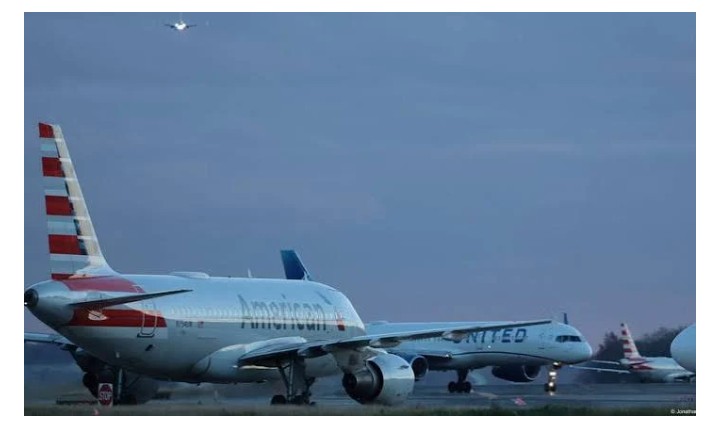
Thousands of flights across the United States were cancelled or delayed on Sunday following a technical malfunction in the country’s air traffic control system, which forced aviation authorities to impose an unusual nationwide ground stop.
More than 5,000 flights were delayed, while approximately 2,000 were cancelled on Sunday alone, as the aviation sector struggled to recover from the disruption. US Transportation Secretary, Sean Duffy, warned that normal flight operations might not be fully restored until Monday.
Speaking to CBS, Duffy explained that airlines were experiencing difficulties repositioning aircraft and flight crews displaced by the incident.
He said the recovery process would take time because several aircraft and their crews were no longer at their scheduled locations.
The crisis began on Friday when the Federal Aviation Administration (FAA) directed all aircraft scheduled to depart from the United States to remain grounded following a failure in a critical communication system used by pilots and air traffic controllers.
At the time the directive was issued, more than 3,500 aircraft were already airborne. Consequently, some flights were diverted to alternative airports, while others were permitted to continue to their original destinations.
Data from flight-tracking platform FlightAware indicated that the disruption had resulted in approximately 8,500 delayed flights and another 8,000 cancellations.
The incident left thousands of passengers stranded at airports, with some reportedly forced to remain inside aircraft parked on airport tarmacs as they waited for clearance to take off or return to their gates.
The consequences also extended beyond the United States, disrupting international travel schedules. Some flights departing from the United Kingdom and other European destinations were reportedly cancelled because of the knock-on effects on airline operations.
Providing preliminary explanations for the technical failure, Duffy disclosed that a computer router installed during an upgrade from copper-wire infrastructure to fibre-optic technology had transmitted faulty signals.
According to him, the equipment, located in El Dorado, Arkansas, overwhelmed the network and interfered with communications across the air traffic control system.
Investigations are ongoing to determine the precise cause of the malfunction and establish responsibility for the incident.
Meanwhile, US President Donald Trump has urged Congress to approve additional funding to accelerate the modernisation of the country’s ageing air traffic control infrastructure.
In a statement published on his Truth Social platform on Sunday, Trump said efforts to upgrade the system were already underway but insisted that the project should be handled as a comprehensive modernisation programme rather than through gradual investments.
He described the existing infrastructure as approximately 50 years old and called for urgent action to replace outdated equipment.
Duffy also emphasised the need for substantial investment to address decades of neglect in the aviation communication network.
Speaking during an appearance on NBC’s Meet the Press, he maintained that significant resources must be committed to rebuilding and strengthening the system.
Similarly, aviation analyst Miles O’Brien described the country’s air traffic control infrastructure as being in urgent need of major repairs, warning that years of inadequate investment had contributed to its deteriorating condition.
The incident has renewed concerns about the reliability of critical aviation infrastructure in the United States, particularly as authorities face growing pressure to prevent similar disruptions and restore public confidence in air travel.