












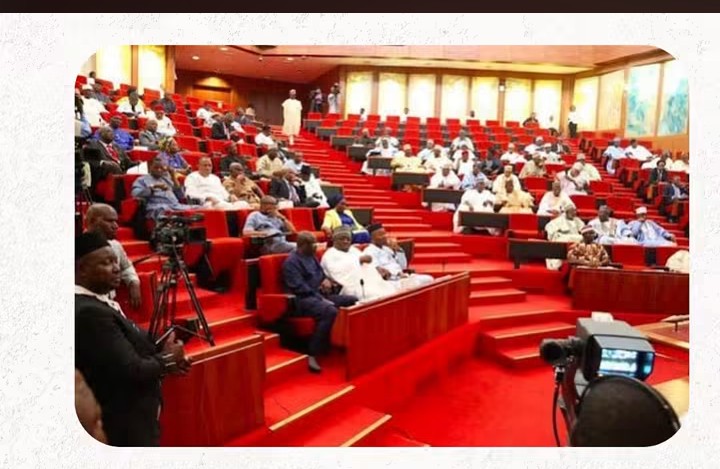
The Senate has clarified that the prohibition of preaching, hawking and trading inside commercial vehicles is not a new provision introduced under the proposed amendment to the Federal Road Safety Corps (FRSC) Establishment Act, stating that the offence has existed in Nigerian law since 2007.
The clarification follows widespread public criticism after reports that the Senate approved the Federal Road Safety Corps (Amendment) Bill, 2026, which includes a ₦50,000 fine for anyone convicted of preaching, hawking or trading in commercial vehicles.
In a statement issued on Monday by the Directorate of Media and Public Affairs in the Office of the Senate Leader, Senator Opeyemi Bamidele, the upper chamber explained that the provision has been part of the FRSC (Establishment) Act, 2007, and is also contained in the National Road Traffic Regulations.
According to the Senate, the amendment before the National Assembly does not create a new offence but merely retains an existing provision that has been in force for nearly two decades.
The statement noted that the prohibition is supported by Section 10(4) of the FRSC (Establishment) Act, 2007, and Regulation 220 of the National Road Traffic Regulations, 2012.
It further explained that the provision was previously listed as Item 36 in the Second Schedule of the Act but has been renumbered as Item 49 in the amended version currently under consideration.
The Senate also dismissed claims that the amendment originated from Senator Bamidele, saying the bill was first amended and passed by the House of Representatives before being transmitted to the Senate for concurrence, as required by the Constitution.
It added that the legislative process is still ongoing and encouraged civil society organisations, transport unions, religious bodies and other stakeholders to submit their concerns before the amendment is finalised.
The clarification comes amid ongoing public debate over the proposed legislation, with many Nigerians questioning the inclusion of penalties for activities carried out inside commercial vehicles.
However, the Senate maintained that the provision has remained part of Nigeria’s legal framework since 2007, stressing that the current amendment only retains and renumbers the existing offence rather than introducing a new restriction.