








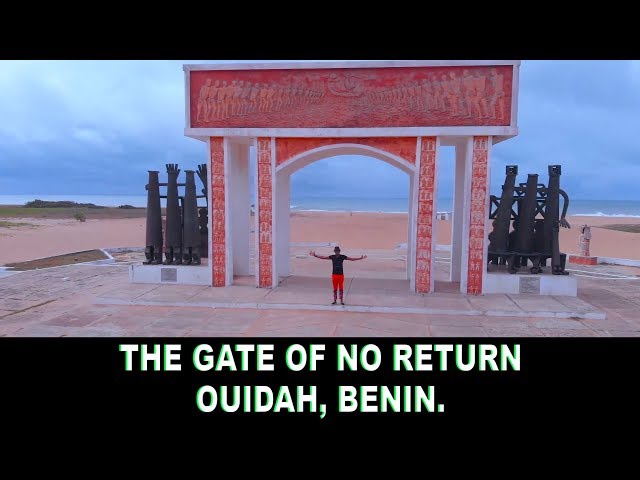
OUIDAH, Benin — The historic city of Ouidah is taking centre stage this weekend as Benin commemorates the International Day for the Remembrance of the Slave Trade and its Abolition with a two-day programme focused on memory, reconciliation and reconnecting the country with the African diaspora.
The 2026 commemoration, taking place on August 22 and 23, is being held under the theme “From the Gate of No Return to the Gate of Return.” The programme brings together memorial activities, cultural events, conferences, panel discussions and initiatives aimed at strengthening ties between Benin and people of African descent around the world.
The choice of Ouidah is deeply significant. The city was one of the major centres associated with the transatlantic slave trade, and its historic Slave Route leads to the Atlantic coast, where enslaved Africans were taken before being transported to the Americas.
For generations, the site has been represented by the Gate of No Return, a powerful symbol of the forced departure of Africans from their homeland. The 2026 theme seeks to give that symbolism a new dimension by presenting Ouidah not only as a place of departure and painful historical memory, but also as a place of return, reconnection and renewed identity.
Two days of remembrance and cultural activities
The activities began on Saturday, August 22, with a memorial march titled “Nos pas dans ceux de nos aïeux” — “Our steps in those of our ancestors.”
The march, scheduled for the morning, follows routes associated with the historical journey of enslaved Africans from Ouidah towards the coast. It is designed to encourage participants to confront the history of the slave trade while paying tribute to those who endured the forced journey.
The day’s programme also includes an international jazz festival at the Maison de la Culture de Ouidah, bringing a contemporary cultural dimension to the commemoration.
On Sunday, August 23, activities will move to Ouidah’s beachfront, where the official ceremony, conferences, panels and public discussions will take place.
The programme includes a keynote conference titled “Treating the space-time of departure to understand the return,” followed by discussions examining historical journeys, colonial plunder and restitution projects.
An interactive session will also allow participants to raise questions and exchange views with speakers, while an afternoon workshop, “Tissus des ancêtres”, will explore ancestral heritage and cultural identity.
Citizenship for Afro-descendants
One of the major highlights of Sunday’s programme will be the official presentation of citizenship documents to Afro-descendants who have obtained Beninese nationality.
The initiative reflects a broader effort by the Beninese government to strengthen its relationship with descendants of Africans who were taken away during the slave trade.
Benin’s 2024 legislation recognised the possibility of Beninese nationality for Afro-descendants, while the My Afro Origins platform, launched in 2025, was established to facilitate genealogical reconnection and related procedures.
The citizenship ceremony therefore gives practical meaning to the 2026 theme. The idea of a “Gate of Return” is not limited to a monument or symbolic expression; it is also being presented as an opportunity for descendants of enslaved Africans to rediscover their ancestral homeland and establish stronger links with Benin.
From painful memory to renewed connection
The commemoration also represents a broader shift in the way Benin is presenting its history.
Rather than focusing exclusively on the suffering and forced departure associated with the slave trade, the 2026 programme seeks to transform historical memory into an avenue for dialogue, cultural reconnection and reconciliation.
Foreign Affairs Minister in charge of Afro-descendant integration, Corinne Amori Brunet, described the approach as a decision to transform memory into action and rebuild relationships with African diasporas.
The programme reflects an attempt to ensure that the history of the slave trade remains relevant to younger generations while creating opportunities for descendants of Africans in the diaspora to engage with their ancestral heritage.
Ouidah’s growing heritage tourism profile
The event also comes as Benin continues to develop Ouidah as an important destination for cultural and heritage tourism.
The city’s historical attractions include the Slave Route, the former auction area, the Tree of Oblivion, the Zomai area, the Tree of Return and the coastal Gate of No Return. These sites collectively tell the story of the movement of enslaved Africans from the interior of Ouidah towards the Atlantic coast.
By combining historical remembrance with music, conferences, cultural workshops and diaspora engagement, the 2026 commemoration gives Ouidah a role that extends beyond being a site of remembrance.
It positions the city as a meeting point between Africa and its global diaspora — connecting painful memories of the past with contemporary efforts to rebuild cultural and ancestral relationships.
Why the event matters
The 2026 commemoration is significant for Benin on several levels.
Historically, it keeps alive the memory of millions of Africans affected by the transatlantic slave trade.
Culturally, it creates a platform for Benin and the African diaspora to explore shared heritage, identity and ancestral connections.
Diplomatically, initiatives such as citizenship for eligible Afro-descendants reinforce Benin’s efforts to deepen its relationship with communities of African descent worldwide.
Economically, the growing emphasis on Ouidah’s historical sites and cultural events could further strengthen heritage tourism and attract visitors interested in African history.
Ultimately, the transformation from the symbolism of the “Gate of No Return” to the “Gate of Return” represents a powerful message: a place once associated with forced separation is being reimagined as a place of remembrance, reconnection and renewed belonging.
As Ouidah hosts the August 22–23 commemorations, Benin is seeking to turn one of the darkest chapters of its history into an opportunity for remembrance, dialogue and a stronger connection between the homeland and the African diaspora.