




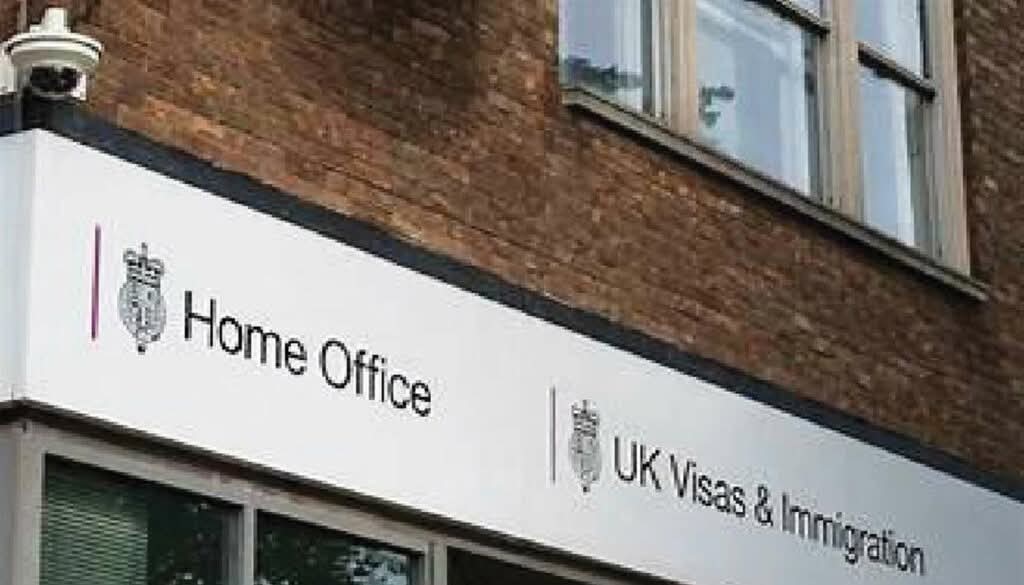
The United Kingdom has introduced an “emergency brake” on study visas for nationals of Afghanistan, Cameroon, Myanmar and Sudan following a sharp increase in asylum claims from individuals who initially entered the country through legal channels.
In a statement released on Wednesday, the UK Home Office said the measure would terminate sponsored study visas for applicants from the four countries and suspend skilled worker visas for Afghan nationals. The changes will be effected through an amendment to the Immigration Rules on March 5 and will take effect from March 26.
According to the department, the decision comes after a notable surge in asylum applications from individuals who arrived on student and other valid visas before later seeking refugee protection.
Official figures show that 133,760 people have applied for asylum after entering the UK legally over the past five years. Since 2021, nearly 135,000 individuals reportedly arrived on study or other visas before submitting asylum claims.
Home Secretary Shabana Mahmood said asylum claims from legal entry routes now account for nearly 40 per cent of total applications. In 2025 alone, they represented 39 per cent of the approximately 100,000 asylum claims recorded.
She noted that asylum applications by students from Afghanistan, Cameroon, Myanmar and Sudan rose by more than 470 per cent between 2021 and 2025. Applications from Myanmar increased sixteen-fold within that period, while claims from Cameroon and Sudan climbed by over 330 per cent.
Data also indicate that between 2021 and September 2025, Afghan asylum claims amounted to 95 per cent of the number of study visas issued to Afghan nationals. Additionally, the number of Afghans on work visas applying for asylum now exceeds the number of visas granted.
Although the government reported a 20 per cent reduction in student-related asylum claims in 2025, individuals who entered on study visas still make up 13 per cent of all pending asylum cases.
The Home Secretary said the financial burden of asylum support remains significant, with costs exceeding £4 billion annually. Nearly 16,000 nationals from the four affected countries are currently receiving state support, including more than 6,000 housed in hotels. She added that the government has cut the asylum support budget by £1 billion since assuming office.
A Home Office spokesperson stated that the government is acting to curb visa abuse while maintaining Britain’s longstanding commitment to assisting those genuinely fleeing persecution.
The announcement coincides with broader asylum reforms that came into effect this week. Under the revised framework, refugee status for adults and their dependent children will now be reviewed every 30 months, replacing the previous five-year grant before eligibility for indefinite leave to remain.
Refugees from countries deemed safe will be expected to return home, while unaccompanied minors will continue to receive five years’ leave pending further policy review. Those already in the UK will be assessed under the former rules.
The government said the shortened protection period, which took effect on March 2, is intended to reduce incentives for irregular migration, including small boat crossings. The reforms are reportedly modelled on Denmark’s strict asylum system.
The Home Secretary is expected to introduce further legislation this week and outline the reforms at the Institute for Public Policy Research think tank.
She said, “Britain will always provide refuge to people fleeing war and persecution, but our visa system must not be abused. I am taking this unprecedented step to ensure fairness and restore control to our borders.”
The measures follow a tougher diplomatic stance by the Prime Minister aimed at strengthening migration enforcement. Last November, the Home Secretary warned that visas for Angola, Namibia and the Democratic Republic of Congo could be suspended unless their governments cooperated in accepting the return of irregular migrants. Subsequent agreements reportedly led to the resumption of return flights.
Despite the restrictions, the government reaffirmed its commitment to safe and legal migration pathways. Since 2021, the UK has resettled over 37,000 Afghans under two humanitarian schemes and granted approximately 190,000 humanitarian visas in 2025 alone. Between 2010 and 2025, the UK ranked sixth globally for refugee resettlement referrals through the UNHCR.
Migration continues to dominate political debate in the UK, with the Reform UK party gaining traction in recent opinion polls.