










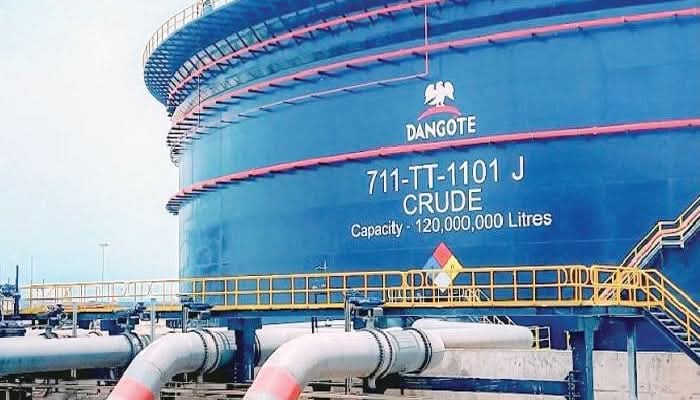
The Dangote Petroleum Refinery has increased the gantry price of Premium Motor Spirit (PMS), commonly known as petrol, to N995 per litre.
The adjustment represents a significant increase of N221 within four days, following volatility in global crude oil prices and rising shipping costs.
A senior official at the refinery confirmed the development on Friday, stating that the price review was necessary due to recent changes in the global oil market.
According to the official, the new gantry price replaces the previous rate of N874 per litre, which had earlier been introduced after the refinery increased its ex-depot price from N774 to N874 per litre earlier in the week.
With the latest adjustment, petrol from the refinery has risen from N774 to N995 per litre in just four days, representing an increase of about 29 percent.
Industry checks on petroleumprice.ng also showed that the updated price has already been reflected on the platform, signalling a change in pricing benchmarks within the domestic downstream petroleum sector.
The development is expected to lead to another rise in pump prices nationwide, with petrol likely to sell above N1,050 per litre in several areas depending on transportation costs and marketers’ margins.
The price increase followed a temporary suspension of petrol loading operations at the refinery, a move that had already sparked speculation among marketers about a possible price adjustment.
Sources disclosed that truck loading of petrol was halted around 2:00 a.m. on Friday, leaving depot owners and bulk marketers uncertain about the refinery’s next pricing decision.
Market analysts noted that similar pauses in product loading at the refinery have often preceded price reviews.
Refinery officials have consistently maintained that petrol pricing is determined by prevailing global crude oil prices, logistics expenses and operational costs.
In a statement issued on Thursday, the refinery explained that its pricing system reflects international market conditions and the cost of crude used for refining.
The company added that the current approach aligns with Nigeria’s deregulated downstream petroleum market, where fuel prices are largely influenced by global crude prices, foreign exchange rates and supply dynamics.
The refinery also said it would continue prioritising supply to the domestic market in order to cushion Nigeria from global supply disruptions, particularly amid the ongoing conflict between the United States and Iran.
According to the company, the conflict has pushed global crude and freight prices higher, with Brent crude rising by about 26 percent to above $84 per barrel within a short period.
Despite the rising costs, the refinery said it has absorbed roughly 20 percent of the increase to reduce the impact on the local market.
Meanwhile, data from the Major Energies Marketers Association of Nigeria showed that imported petrol currently remains cheaper than the product refined locally.
The data indicated that as of Monday, the landing cost of imported petrol stood at about N809.37 per litre, compared to the refinery’s earlier gantry price of N874 per litre.
Similarly, imported diesel was priced at N1,125.70 per litre, slightly lower than the refinery’s diesel price of N1,169.42 per litre.