





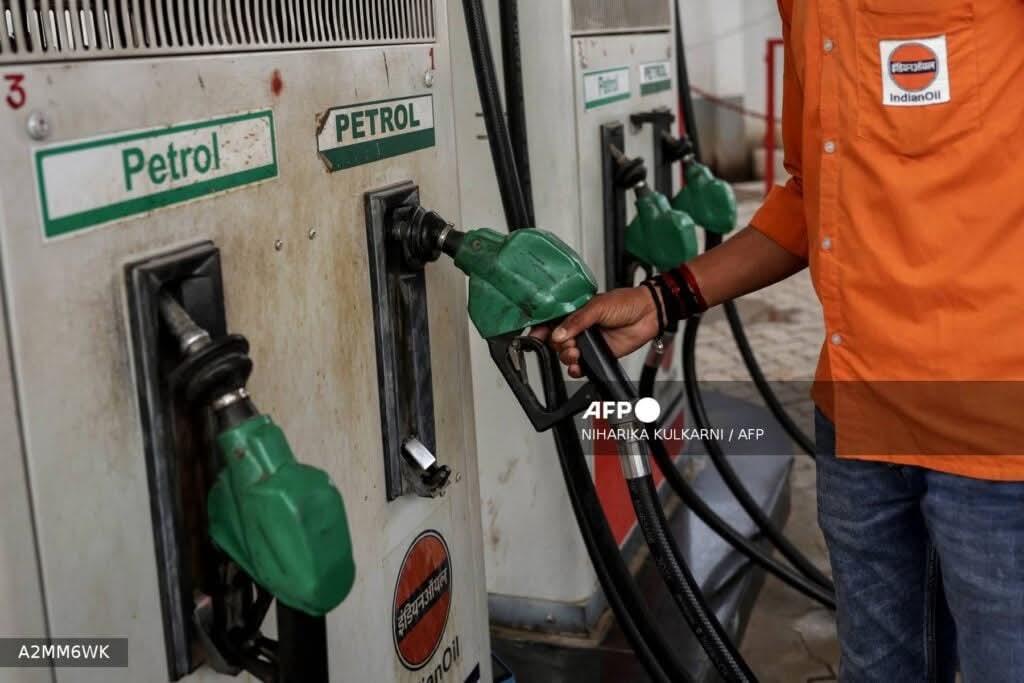
Oil prices climbed Tuesday after Iran launched new attacks on neighboring crude-producing facilities, while global stock markets rose ahead of crucial central bank decisions.
The spike in crude prices came after a brief drop the previous day, following comments from the International Energy Agency that additional reserves could be released if necessary.
US equity markets opened higher, buoyed by Nvidia’s projection of at least $1 trillion in revenue through 2027 and strong first-quarter earnings reports from major airlines. Delta and American Airlines both rose nearly 5%. European markets were mostly in positive territory by mid-afternoon.
“Markets have shown resilience,” said David Morrison, Senior Market Analyst at Trade Nation, “but investors remain cautious amid geopolitical tensions and monetary policy uncertainty.”
Asian markets were mixed, with gains in Hong Kong, Seoul, and Taipei, while Tokyo and Shanghai saw slight declines.
Investors are closely watching a series of central bank meetings this week. Expectations suggest interest rates may remain steady as high energy prices threaten inflation, even amid signs of a softening US labor market.
“The Federal Reserve is in a bind,” said eToro analyst Bret Kenwell. “Slower growth typically suggests easing, but persistent inflation and surging oil prices complicate the outlook.”
Australia’s central bank raised its key interest rate Tuesday, citing sharply higher fuel costs.
Brent North Sea crude and West Texas Intermediate (WTI) both rose about 2%, with WTI trading at $95.08 and Brent at $102.16 per barrel.
Tensions in the Middle East intensified as a drone strike hit the Fujairah oil complex in the UAE, allowing exports to bypass the Strait of Hormuz. Two drones also targeted a major southern Iraqi oil field, marking the second attack in four days.
In parallel, Israel said it killed Iran’s national security chief and carried out extensive strikes in Tehran, while also targeting Hezbollah positions in Beirut.
“The conflict is shifting from a shipping crisis at the Strait of Hormuz to a broader oil supply crisis,” said Kathleen Brooks, research director at XTB.
US former President Donald Trump called on European allies to help reopen the Strait of Hormuz, but Germany, the UK, Spain, Poland, Greece, Sweden, Australia, and Japan have distanced themselves from the request.
Market Snapshot (approx. 1340 GMT):
- WTI: +1.7% at $95.08/barrel
- Brent: +2.0% at $102.16/barrel
- Dow: +0.9% at 46,946.41
- S&P 500: +0.7% at 6,742.97
- Nasdaq: +0.7% at 22,517.17
- FTSE 100: +0.9% at 10,411.62
- CAC 40: +1.0% at 8,015.22
- DAX: +0.8% at 23,742.52
- Tokyo Nikkei 225: -0.1% at 53,700.39
- Hong Kong Hang Seng: +0.1% at 25,868.54
- Shanghai Composite: -0.9% at 4,049.91
- Euro/USD: $1.1538
- Pound/USD: $1.3347
- Dollar/Yen: 158.88
- Euro/Pound: 86.43 pence
AFP