


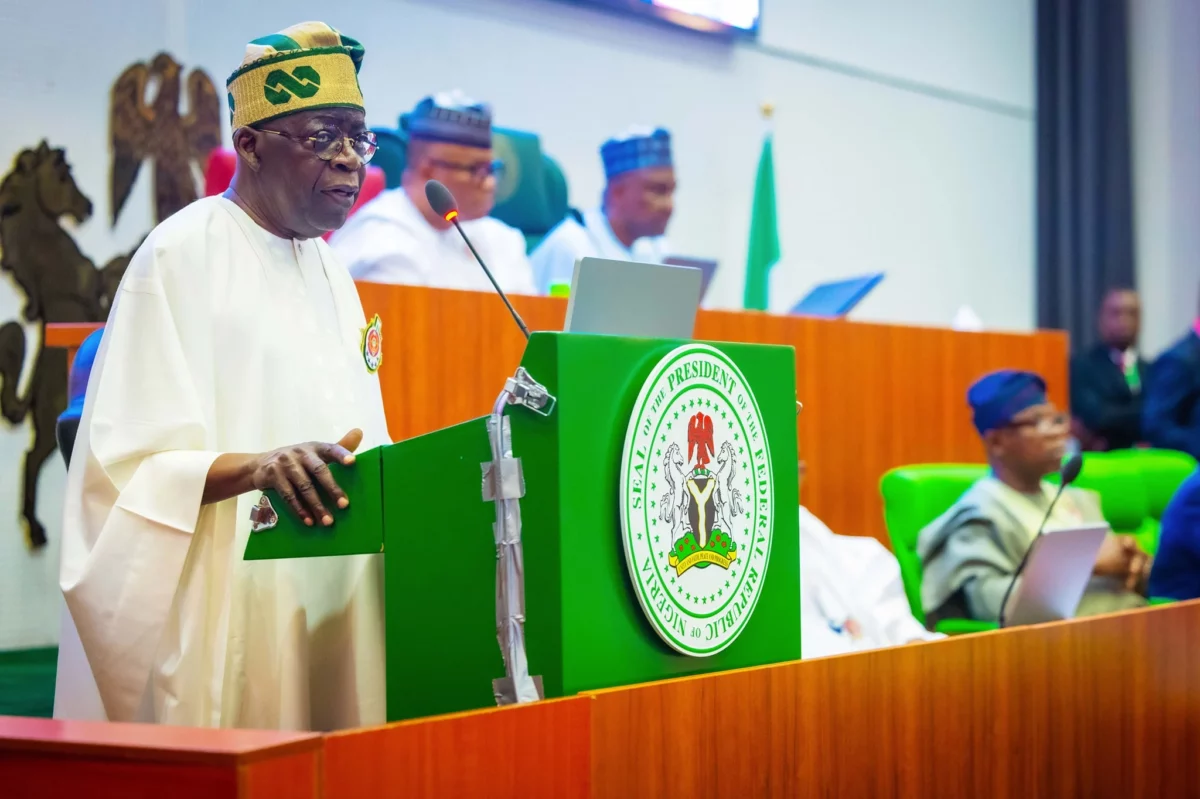










Former President Patrice Talon has returned to the centre of Benin’s political establishment after being elected the first President of the country’s newly created Senate.
Talon was elected on Thursday, August 6, 2026, during a sitting at the Palais des Gouverneurs in Porto-Novo. He secured 24 of the 25 votes cast, with one blank ballot, giving him a five-year mandate to lead the new upper chamber of Parliament.
The election marks a major institutional and political development for Benin. For the first time, the country now operates a bicameral parliamentary system, with the Senate serving as the upper chamber alongside the National Assembly.
A return to the political frontline
Talon’s election is particularly significant because it comes only a few months after he left the presidency following two terms in office.
The former businessman governed Benin from 2016 until 2026 before handing over power to Romuald Wadagni, his former Minister of Economy and Finance and political ally, following the 2026 presidential election.
Rather than withdrawing completely from public affairs, Talon has now assumed another senior constitutional position. His emergence as Senate President places him at the head of one of the country’s most important new institutions and ensures that he remains a major figure in national political affairs.
His new role, however, is constitutionally different from the presidency. The Senate is part of the legislative branch and does not give Talon executive authority over the government.
How the new Senate was created
The Senate is the product of a constitutional reform adopted in November 2025. The reform introduced bicameralism into Benin’s political system and established the Senate as the second chamber of Parliament.
The new institution was formally installed on July 30, 2026, while its internal regulations were subsequently validated by the Constitutional Court before senators proceeded to elect their leadership.
The Senate has 25 members. Its membership includes former presidents and other senior political figures, alongside members designated through the procedures established by the Constitution. Former presidents Thomas Boni Yayi and Nicéphore Soglo are among its members, while Talon sits as a member by virtue of his status as a former president.
Who will work with Talon?
Talon will head a Senate bureau that includes several experienced figures from Benin’s political establishment.
Louis Vlavonou, a former President of the National Assembly, was elected Vice-President of the Senate.
Alassane Seidou was selected as Rapporteur, while Adidjatou Mathys, a former minister, was chosen as Deputy Rapporteur.
The composition of the leadership means that several figures with extensive experience in government and Parliament will be responsible for establishing the working culture of Benin’s first Senate.
What powers does the Senate have?
The Senate is not simply a ceremonial institution.
Under the constitutional framework, the upper chamber has legislative and institutional responsibilities. It can, in certain areas, request reconsideration of legislation adopted by the National Assembly. Its responsibilities also include matters relating to constitutional laws, political parties and the functioning of key institutions.
The Senate has also been presented as an institution intended to contribute to political stability, national unity, peace and the effective functioning of state institutions.
This means that its influence could extend beyond ordinary legislative debates and into broader questions concerning Benin’s political system.
What Talon’s election means for Wadagni
Perhaps the biggest political question arising from Talon’s new position is how it will affect the relationship between the former president and his successor, Romuald Wadagni.
Wadagni now occupies the presidential palace and controls the executive branch, while Talon heads the newly established upper chamber of Parliament.
Although the two men are political allies, Talon’s continued presence at the top of the political system means that he is not disappearing from national politics after leaving the presidency.
Some political observers have therefore questioned whether Talon’s influence could remain substantial under Wadagni’s administration. The possibility of the former president continuing to influence political affairs is one of the key issues likely to shape discussions about Benin’s new political era.
At the same time, Talon’s position does not provide him with presidential immunity. Legal experts cited by Le Monde noted that becoming Senate President does not prevent legal proceedings against a former president where applicable.
A new chapter for Benin
Talon’s election therefore represents more than the appointment of a parliamentary leader. It is the first major test of Benin’s newly established bicameral political architecture.
The country is moving from a legislature dominated by a single National Assembly to a system in which the National Assembly and Senate will operate as two chambers.
For Talon personally, the development represents a remarkable continuation of political influence. After ten years as President, he has moved directly into another senior constitutional position.
For Wadagni, the challenge will be to demonstrate that his presidency can develop its own political identity while managing a political environment in which his predecessor remains a powerful and highly experienced figure.
The effectiveness of this new arrangement will ultimately depend on how the executive, National Assembly and Senate work together, and whether the new upper chamber succeeds in fulfilling its constitutional purpose of strengthening institutional stability, political dialogue and national unity.
With Talon now occupying the Senate’s top seat, Benin’s political transition has entered a new and closely watched phase.